POP Profile Light Design: Lines, Cove and Concealed Light
- 12 designs
- Ceiling, fans and lights
- Updated 07 Oct 2026
A POP profile light design uses thin LED lines set in the ceiling to give clean, modern light. Add cove and spots, and one ceiling can light the whole room.
Below are 12 original pop light design ideas with profile lines, concealed cove, spots and light boxes. Each one lists the light type, budget and what to tell your mistri.
Planning a dropped ceiling first? See POP false ceiling design or our home page.
Pop Design with Profile Light Lines
A profile light is an LED strip inside a slim aluminium channel set into the POP. You see a sharp line of light, not a glow. It is the cleanest modern look right now.
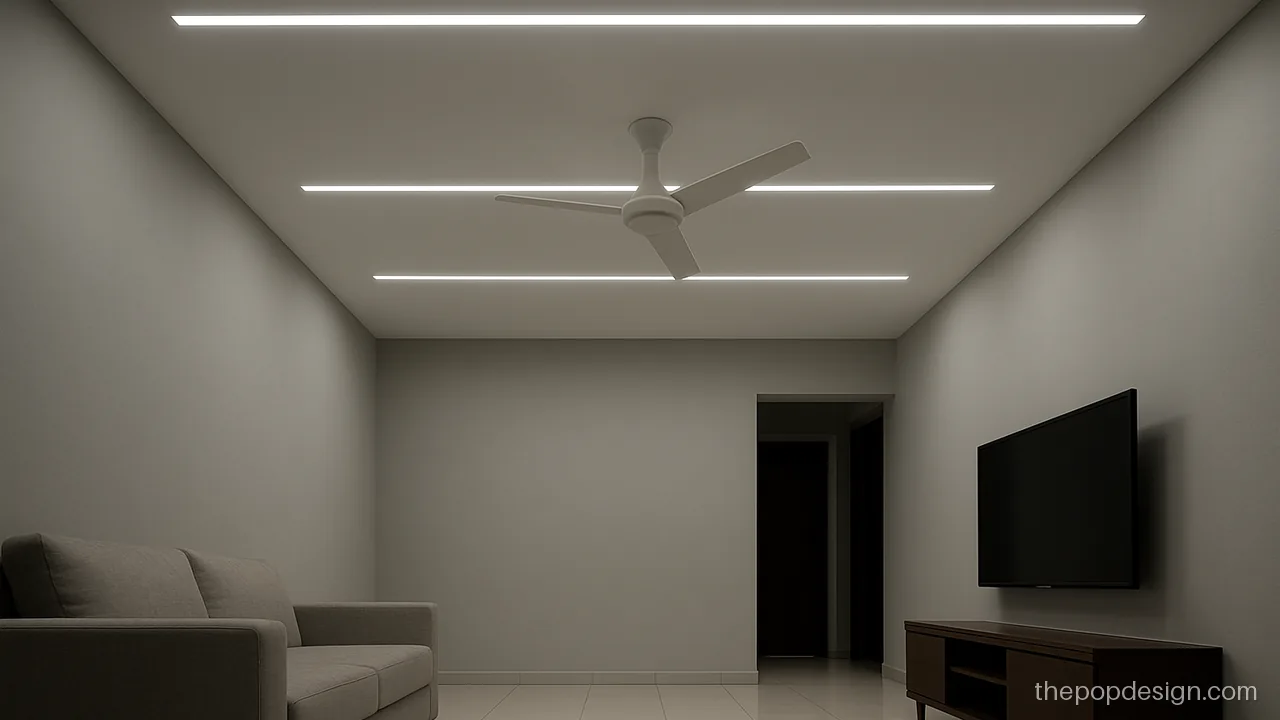
This pop light design photo shows three straight lines crossing the hall at equal gaps. It reads modern and gives good spread for daily use.
Contractor tip: Profile channel goes in before punning. Ask for equal gaps marked with a thread.
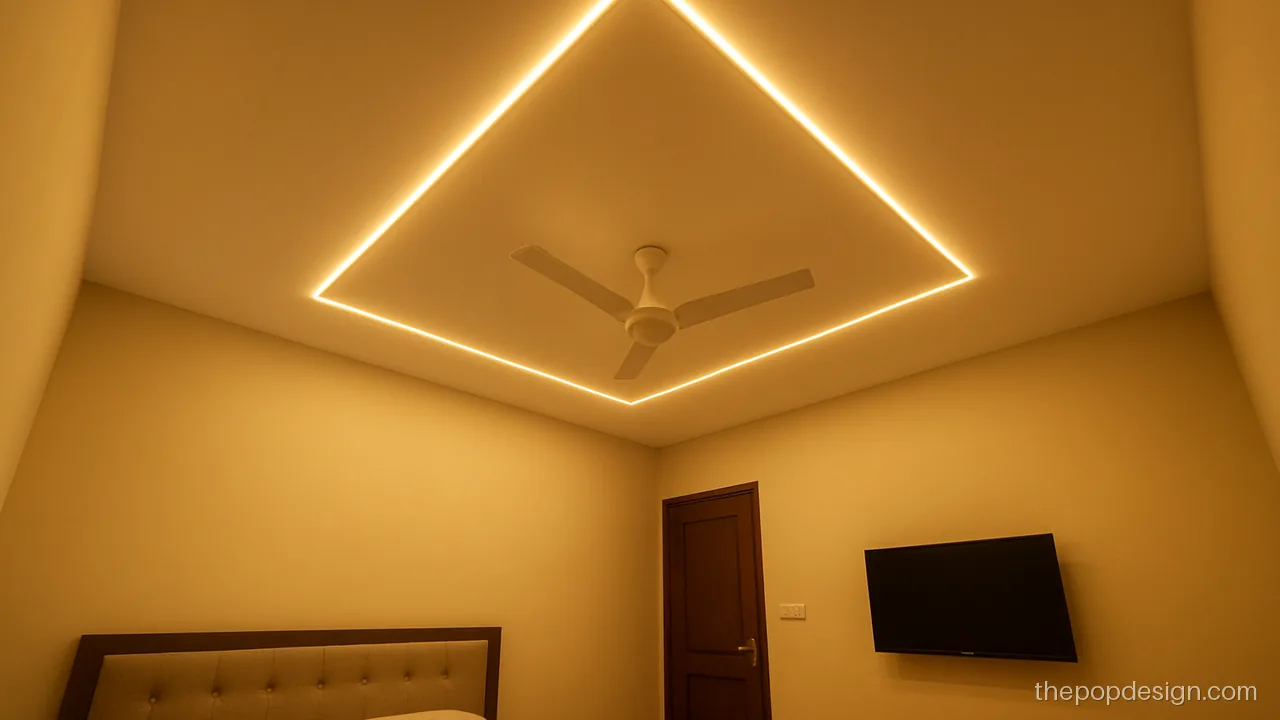
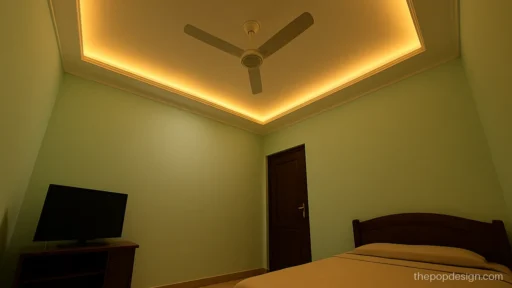
One rectangle outline in warm light. Simple, calm and enough for a bedroom with a bedside lamp.
Contractor tip: Ask for corner joiners on the channel so the light does not break at corners.
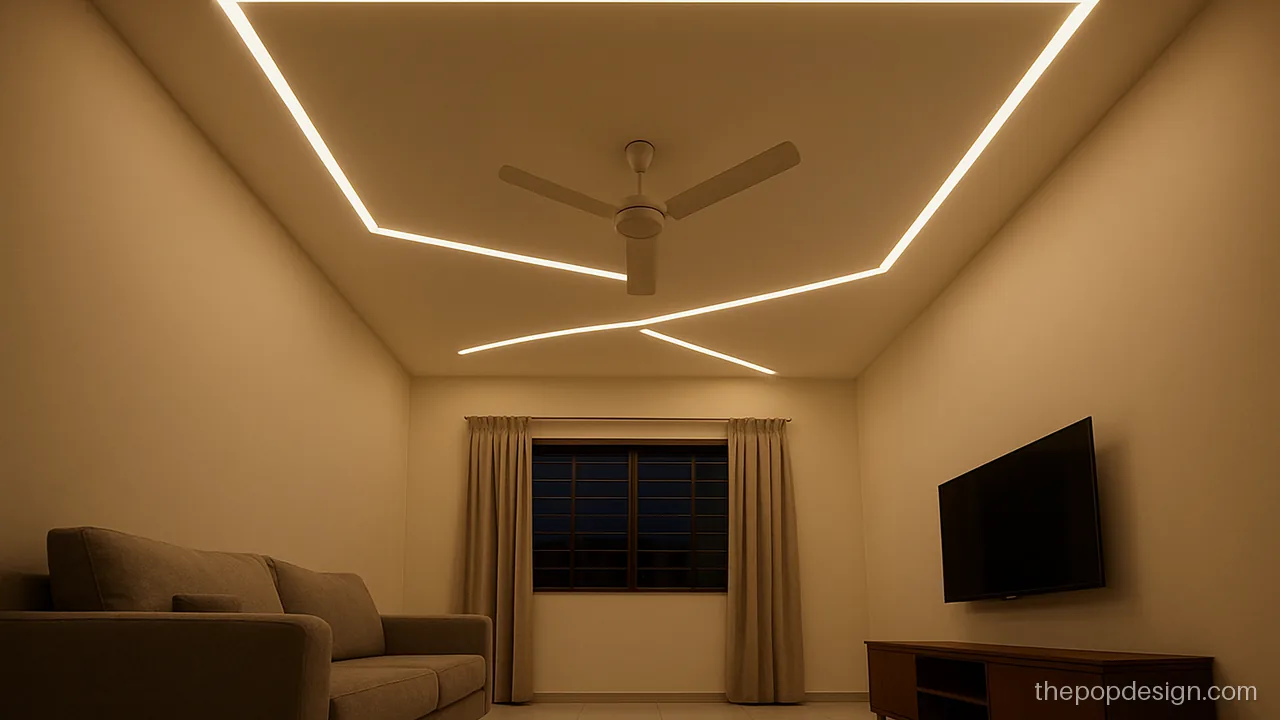
Angled lines break the box shape and look sharp in a modern living room. Keep to three or four lines.
Contractor tip: Angled cuts need a template. Ask for the line plan drawn on the ceiling first.
Cove and Concealed Light POP Design
Cove light hides the strip in a groove so it washes the ceiling with soft light. It is often called concealed light. It suits bedrooms and relaxed halls better than sharp profile lines.
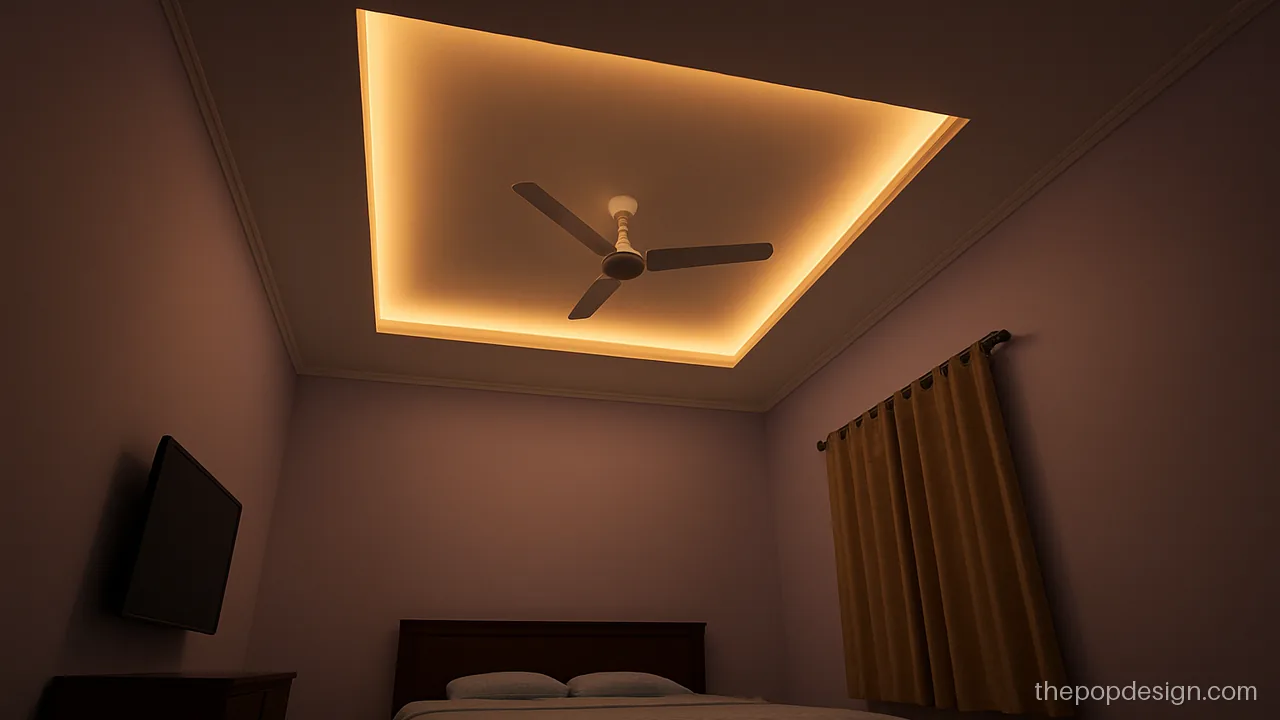
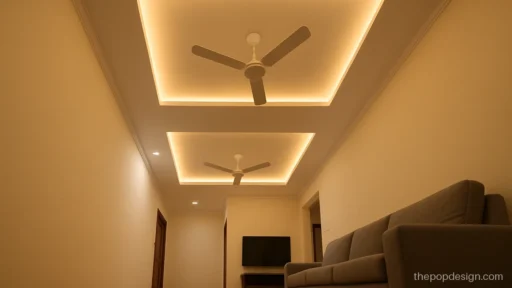
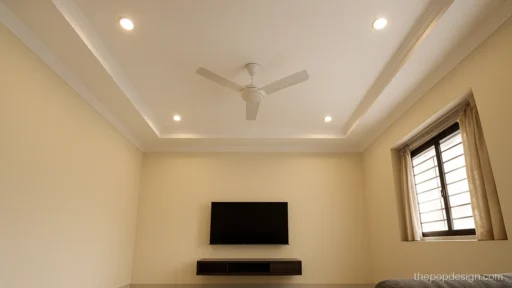
A warm cove washes the recessed square with soft light. The glow hides small flaws in the POP.
Contractor tip: Cove lip of 3 inches hides the strip. Ask them to test the strip before closing.
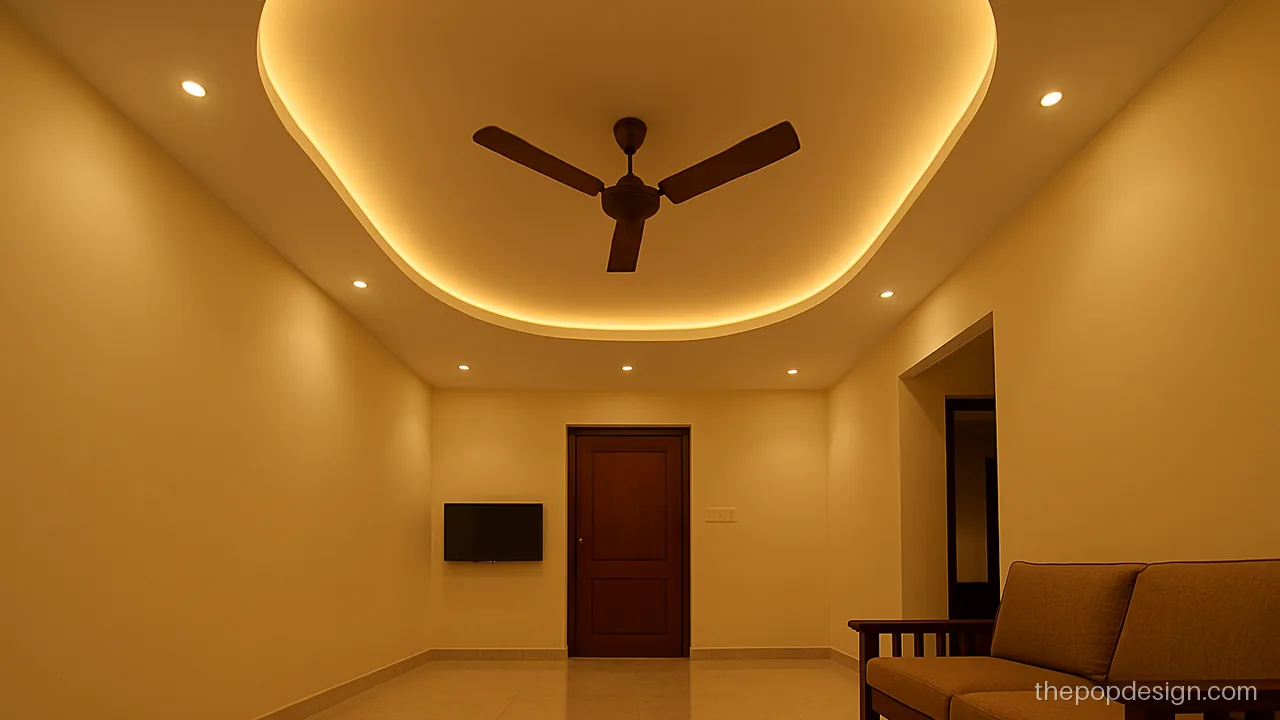
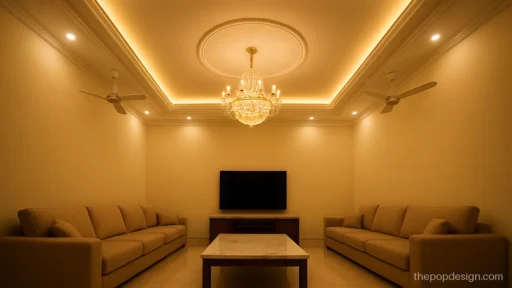
The cove follows a curved border so the light flows round the room. It softens a hall with sharp furniture.
Contractor tip: Flexible strips are needed for curves. Ask for a driver with spare capacity.
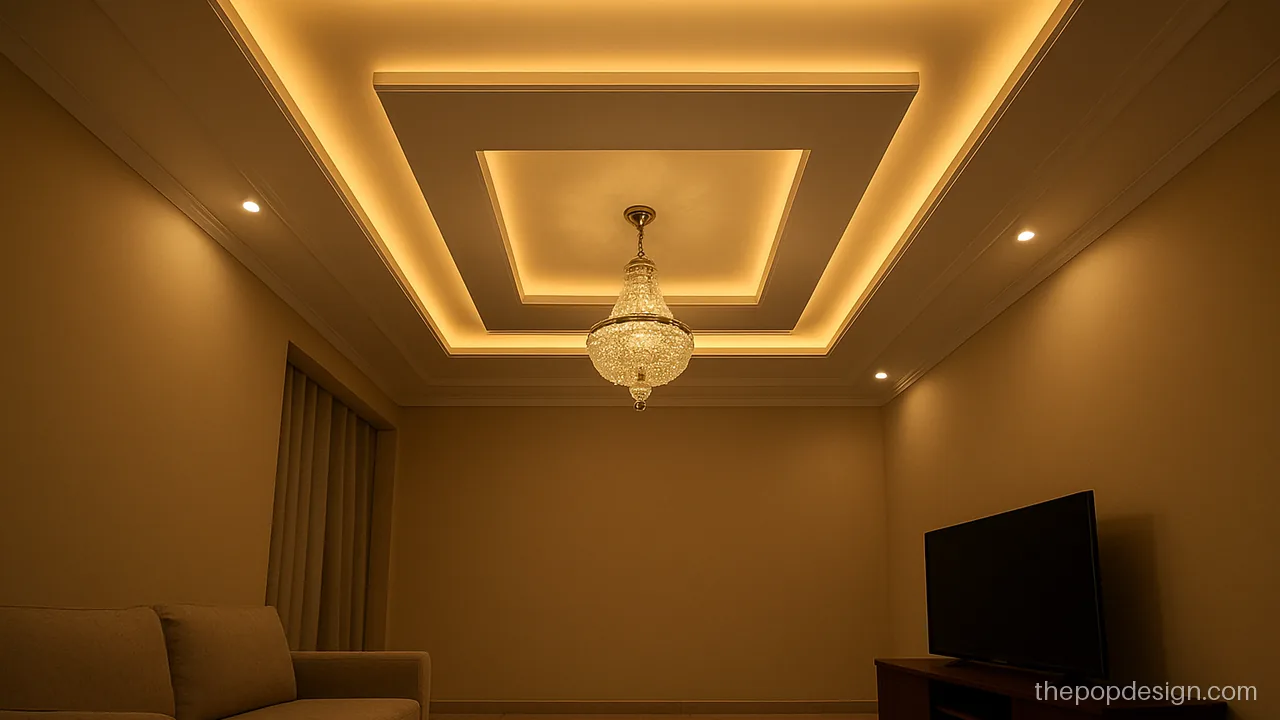
Two layers of cove make the ceiling look deep. Use a dimmer so you can drop to one layer at night.
Contractor tip: Two layers need about 8 inches of drop. Keep separate switches for each layer.
Pop Light Design for Hall with Spot Lights
Spot lights give focused light on a sofa, art or a dining table. Mix them with cove or profile lines so the room is not lit only from above. For a hall plan, see POP design for hall.
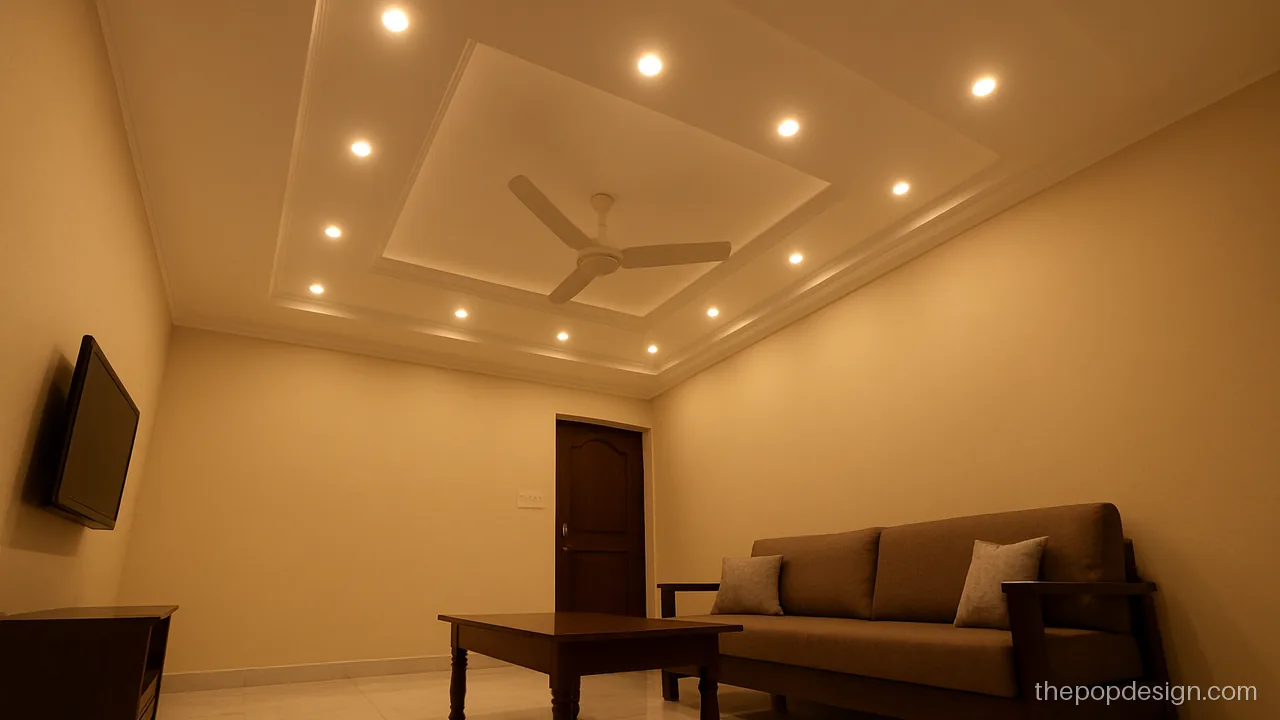
Spots run in a ring through the border, evenly spaced. Each lights a part of the room without glare.
Contractor tip: Spots should be 3 to 4 ft apart and at least 18 inches from walls.
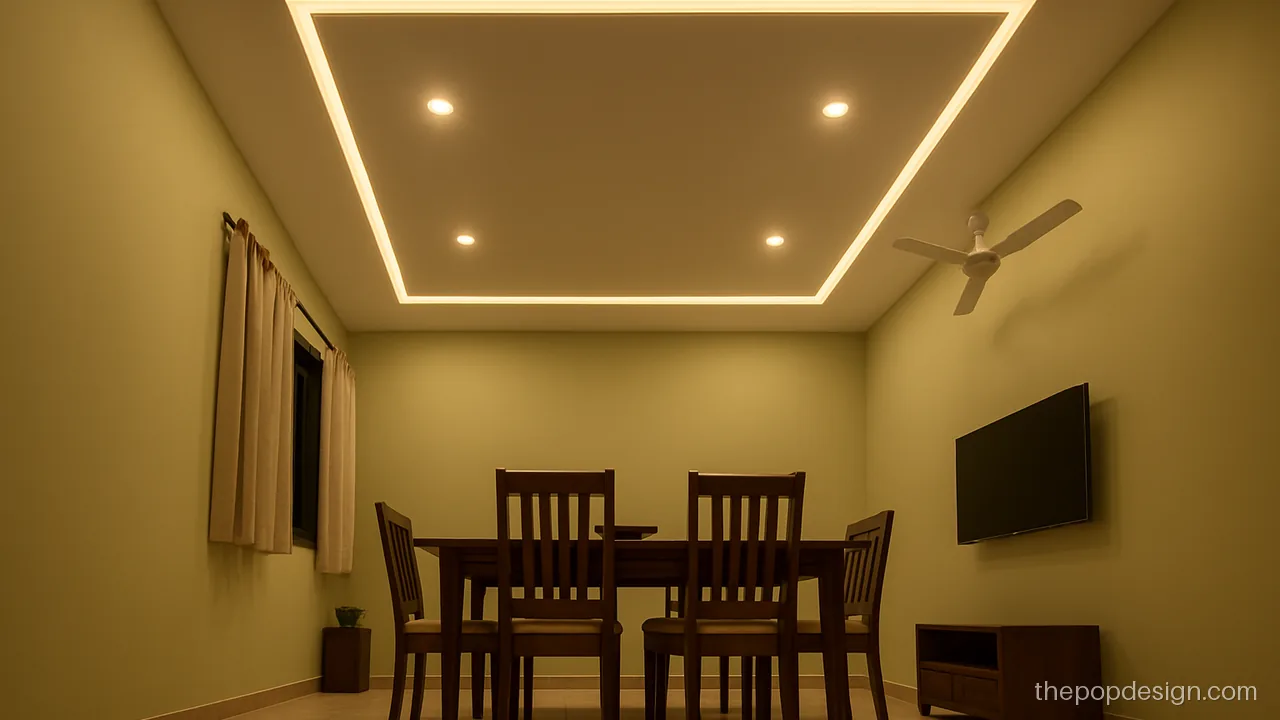
A profile line marks the dining zone while spots light the table. Two light types, one clear purpose each.
Contractor tip: Put spots and profile on separate switches. Centre spots on the table, not the room.
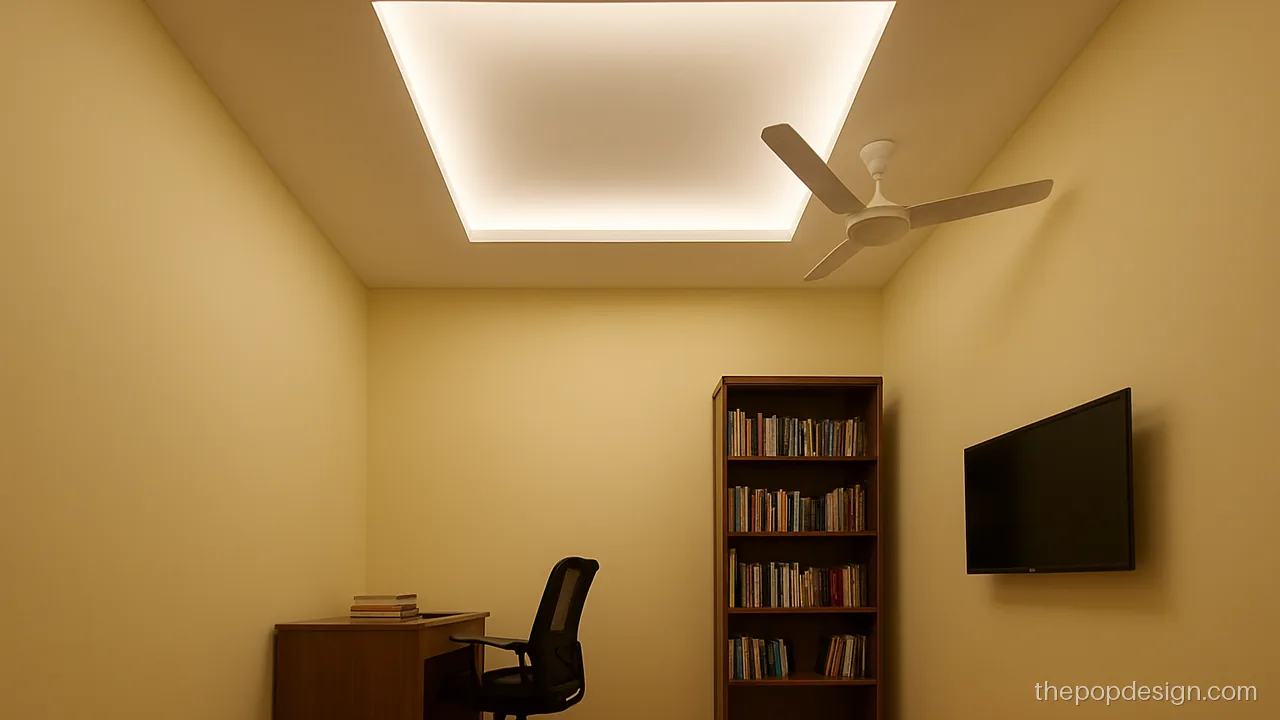
A light box with a frosted cover gives even, shadow-free light. Good over a study table or kitchen counter.
Contractor tip: Light box needs a removable cover. Ask for a frame that holds the cover flush.
Concealed Light POP Design Plus Minus and Light Patterns
Plus minus levels give the light places to hide. Patterns like rings and grids add interest. See our plus minus POP design page for more level ideas.
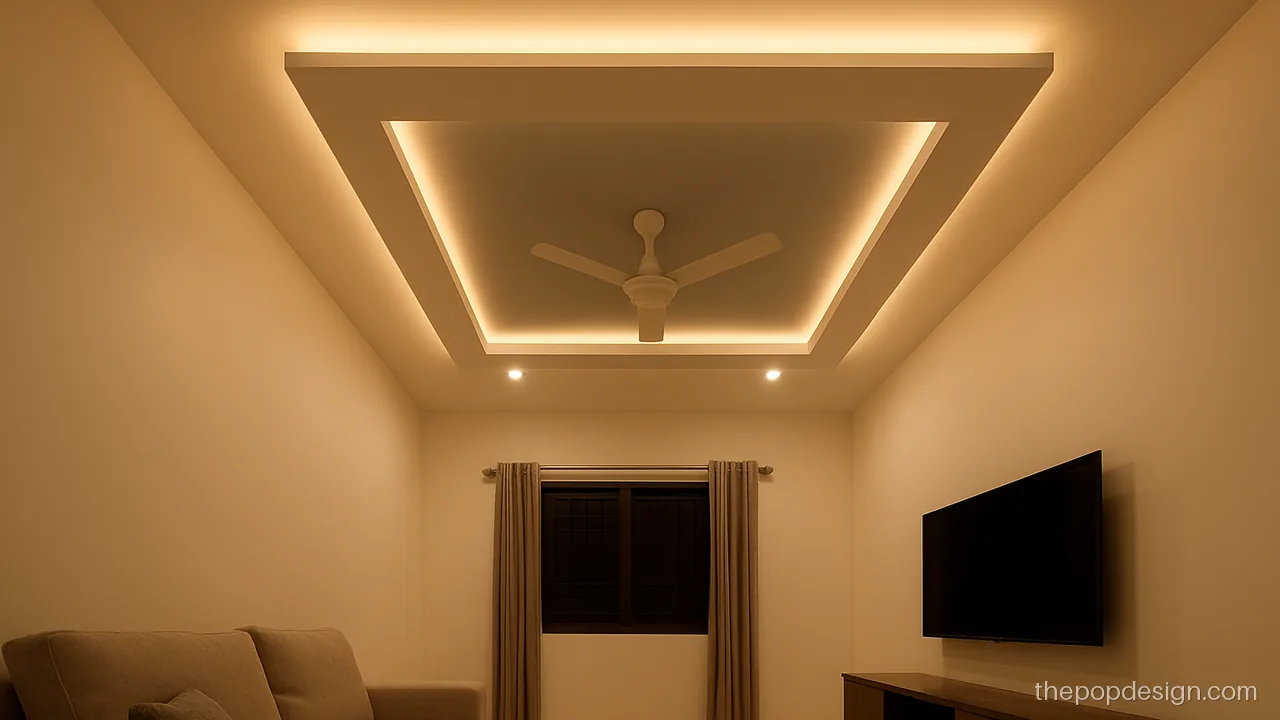
The light hides in the step between grey and white levels. It makes the recess seem to float.
Contractor tip: Step should be at least 2.5 inches so the strip is fully hidden.
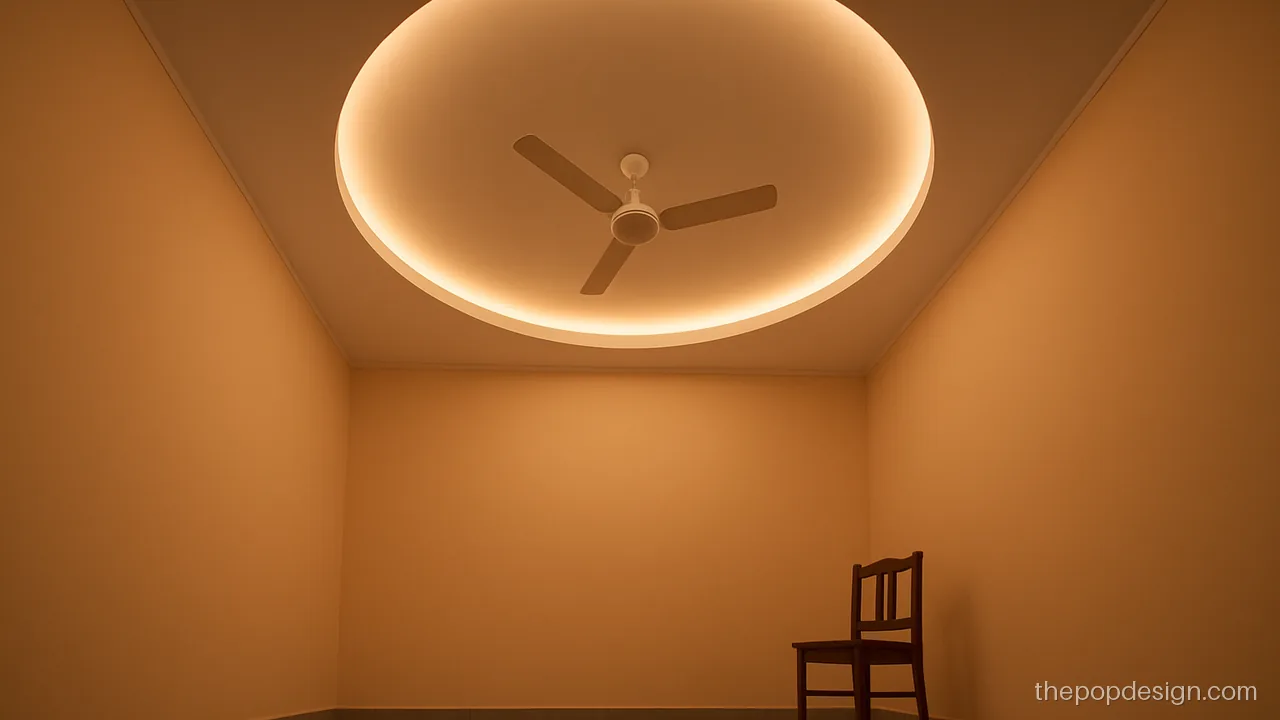
A simple ring of hidden light around the fan. One of the easiest light patterns for a square room.
Contractor tip: Ring must be centred on the fan hook. Use a string compass from the slab point.
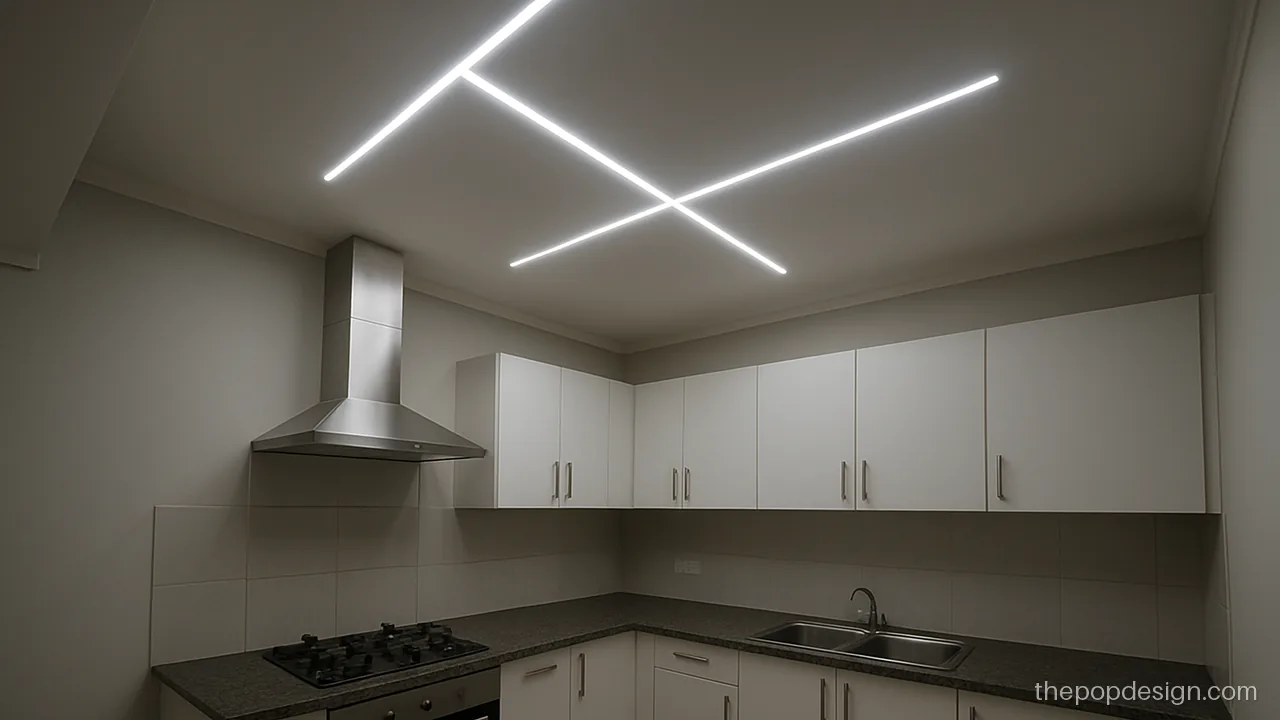
A simple grid of profile lines lights the kitchen evenly. Cool light helps while cutting and cooking.
Contractor tip: Use a moisture-safe board near the stove. Keep lines clear of the chimney duct.
Profile Light vs Cove Light, Warm vs Cool
Profile light is an LED strip inside an aluminium channel with a diffuser cover. The channel is fixed to the frame and the POP is finished up to its edge, so you get a sharp line. Cove light hides the strip in a groove and bounces light off the ceiling for a soft glow.
| Colour | Feel | Best for |
|---|---|---|
| Warm 3000K | Cosy, yellowish | Bedroom, hall at night |
| Neutral 4000K | Balanced | Living, dining, office |
| Cool 6000K | Bright, white | Kitchen, study, clinic |
What to Tell Your POP Wala About Lights
- Fix the light plan and switch plan before the frame goes up.
- Profile channels must be fixed before punning, not cut in later.
- Keep LED drivers where you can reach them, near a removable panel.
- Test every strip before the groove is closed.
- Fans hang from slab hooks, never from POP near a light line.
Cost is ceiling area times the design rate, plus running length of profile and cove, number of spots and drivers. More lines mean higher cost. For a two fan layout, see 2 fan POP design.
POP design questions
What is a profile pop design?
It is a ceiling with thin LED light lines set in aluminium channels inside the POP. The lines give sharp, modern light. They can run straight, at angles or as outlines.
Which is better, pop profile design or cove light?
Profile lines look sharp and modern, cove light looks soft and warm. Many homes use profile in the hall and cove in bedrooms. You can mix both on one ceiling.
Can I get a simple pop light design on a low budget?
Yes. A ring of spots or one profile rectangle is enough for most rooms. Fewer lines and fewer drivers keep the budget Low.
Does a pop design profile light heat up or crack the ceiling?
Good LED strips run cool. Cracks near lines usually come from poor joints or painting too soon. Tape the joints and let the POP dry fully.
Is pop design without light a good idea?
It can be, if you use wall lights or a fan light. But adding at least a few spots or a cove makes the ceiling worth the work. Plan wiring early even if you add lights later.