Balcony POP Design Ideas for Front Balcony and Veranda
- 12 designs
- By room
- Updated 07 Oct 2026
A balcony POP design has one job before it looks good: it must survive rain, sun and damp air. The ceiling of a balcony or baranda is half outside, so the slab above must be waterproof first.
Whether you call it a POP balcony design or a baranda ceiling, the rules are the same. The ideas below cover front balconies, small flat balconies, light plans and the outer edge. Each card shows the size it suits, lighting, budget and a note for your POP wala. For a covered entry, see POP design for porch, and for wet-area materials see PVC and gypsum POP design.
Front Balcony POP Design
The front balcony is seen from the street, so keep lines clean and bold. These front balcony POP design ideas use simple shapes that read well from below. The balcony POP design latest look is flat panels and slim lights, not heavy layers.
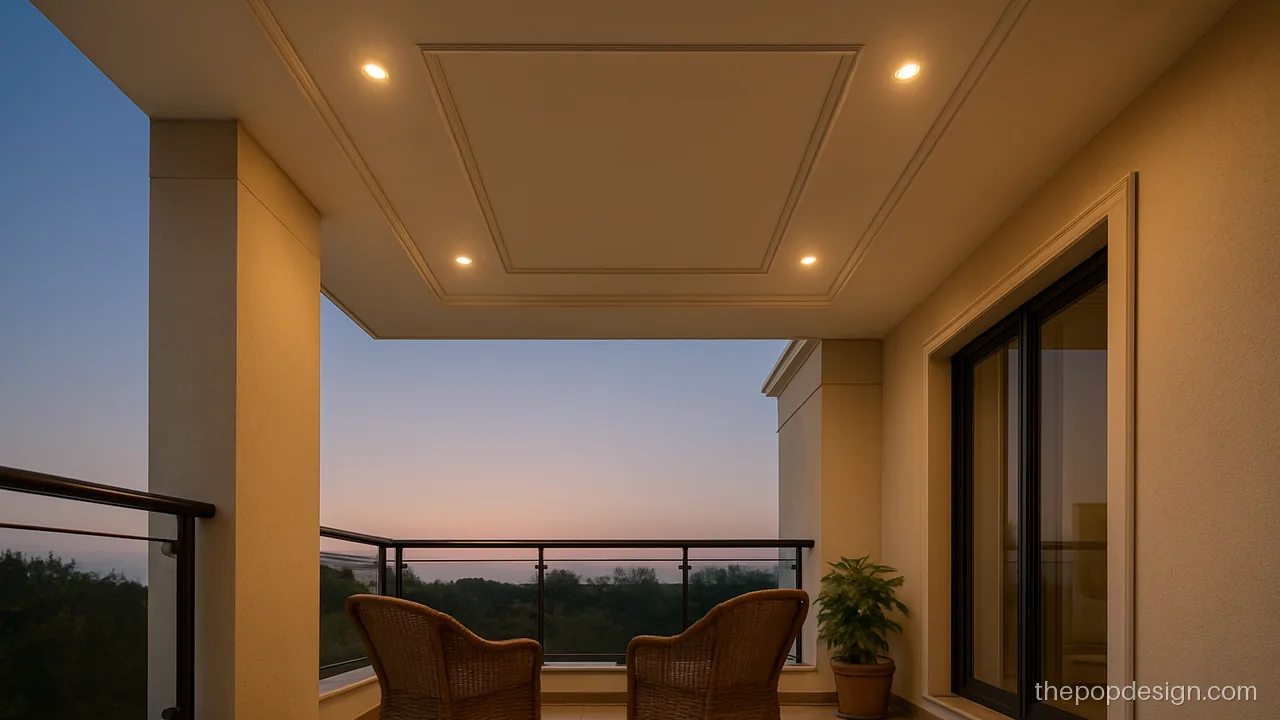
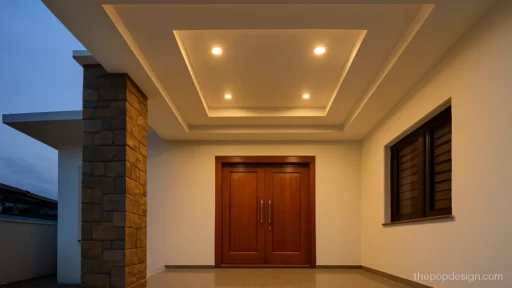
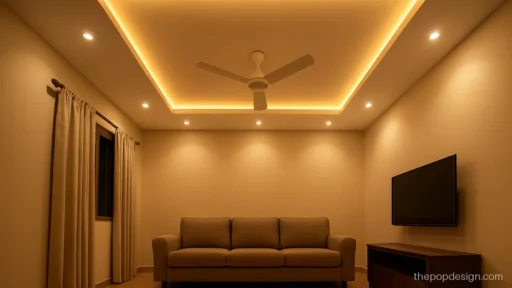
A single raised panel with warm spots looks neat from the road and inside. Simple shapes like this stay clean longer outdoors.
Contractor tip: Use moisture-resistant board, not plain POP sheets. Seal the outer edge with exterior grade putty.
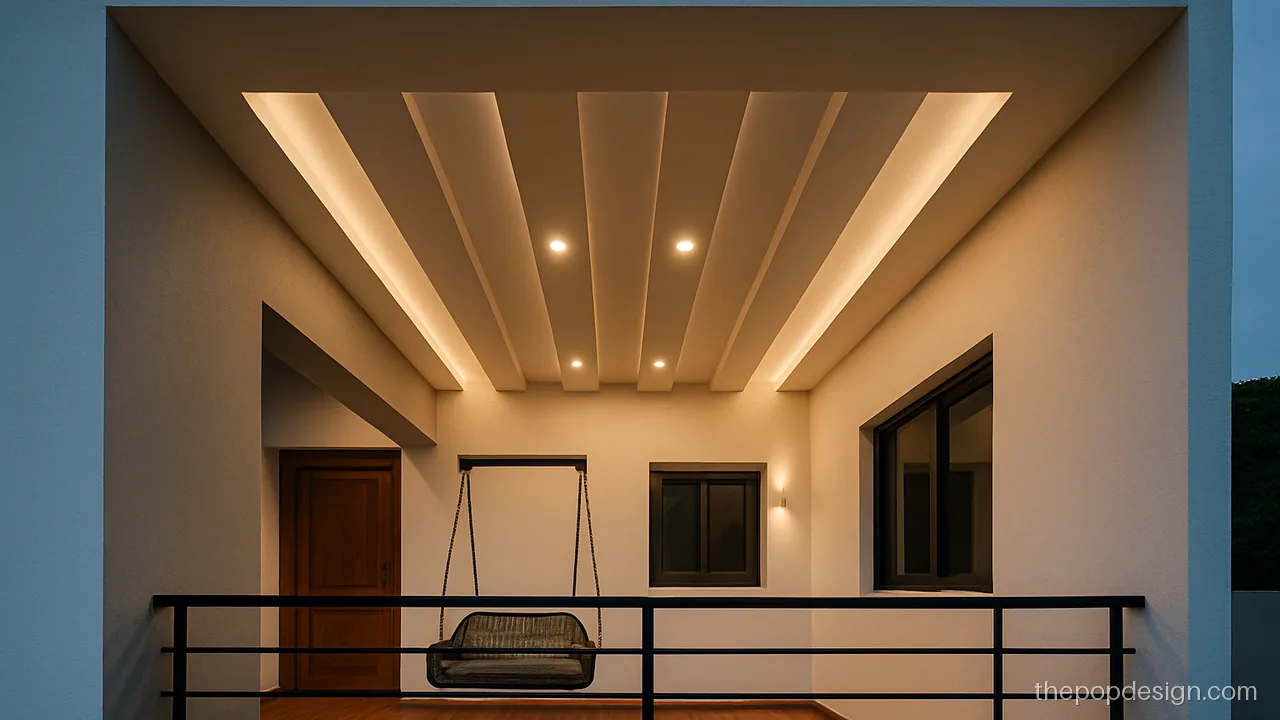
Grey recessed strips between white raised boxes give this POP design balcony ceiling depth without dust traps. It suits modern houses with grey or white fronts.
Contractor tip: Keep box depth to 2 inches. Slope the outer lip so rain water drips off and does not run back.
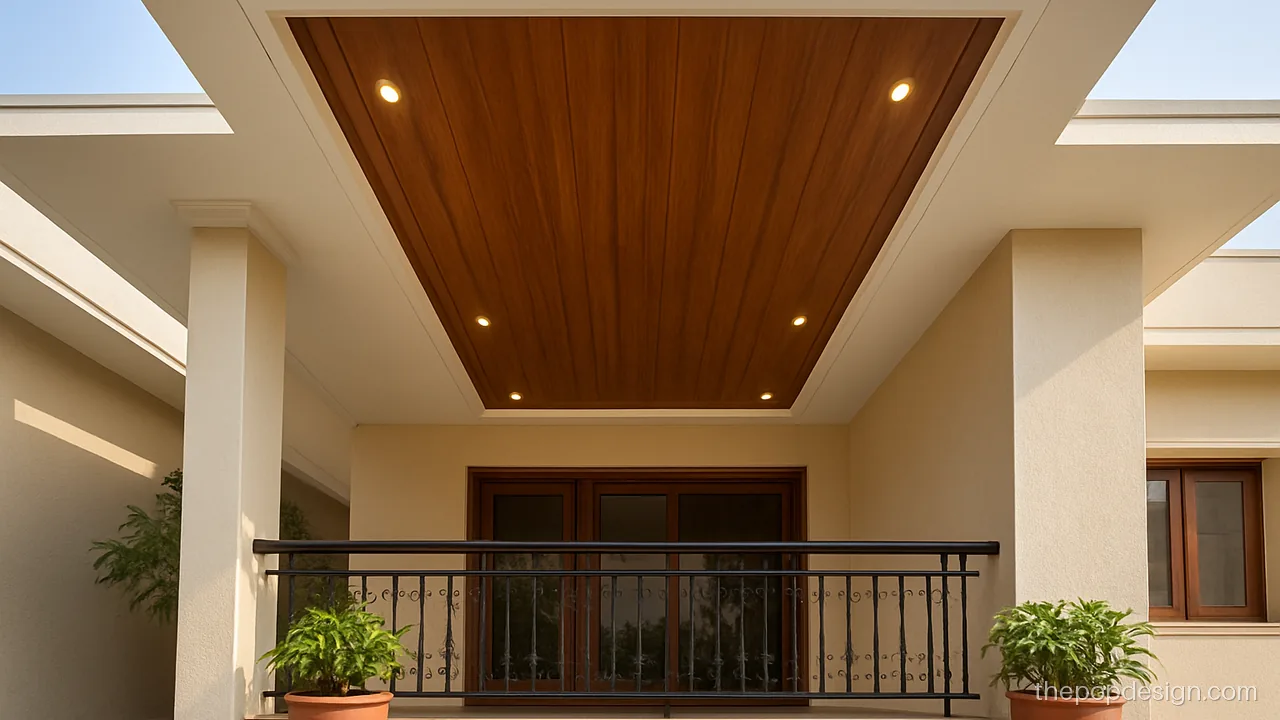
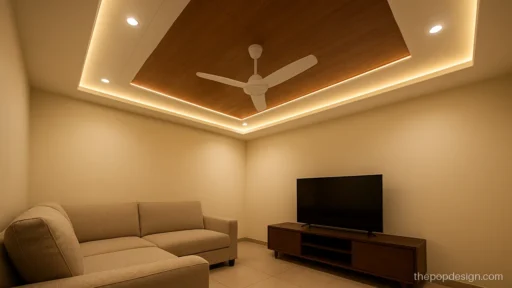
A wood-look band in the middle warms up the front and hides small water stains. Use PVC or exterior-grade planks.
Contractor tip: Use PVC wood-look planks for the band. Keep a 1 inch gap at the wall for air and movement.
Small Balcony POP Design
Flat balconies are often only 4 or 5 feet deep. A small balcony POP design must stay shallow and leave head room for drying clothes.
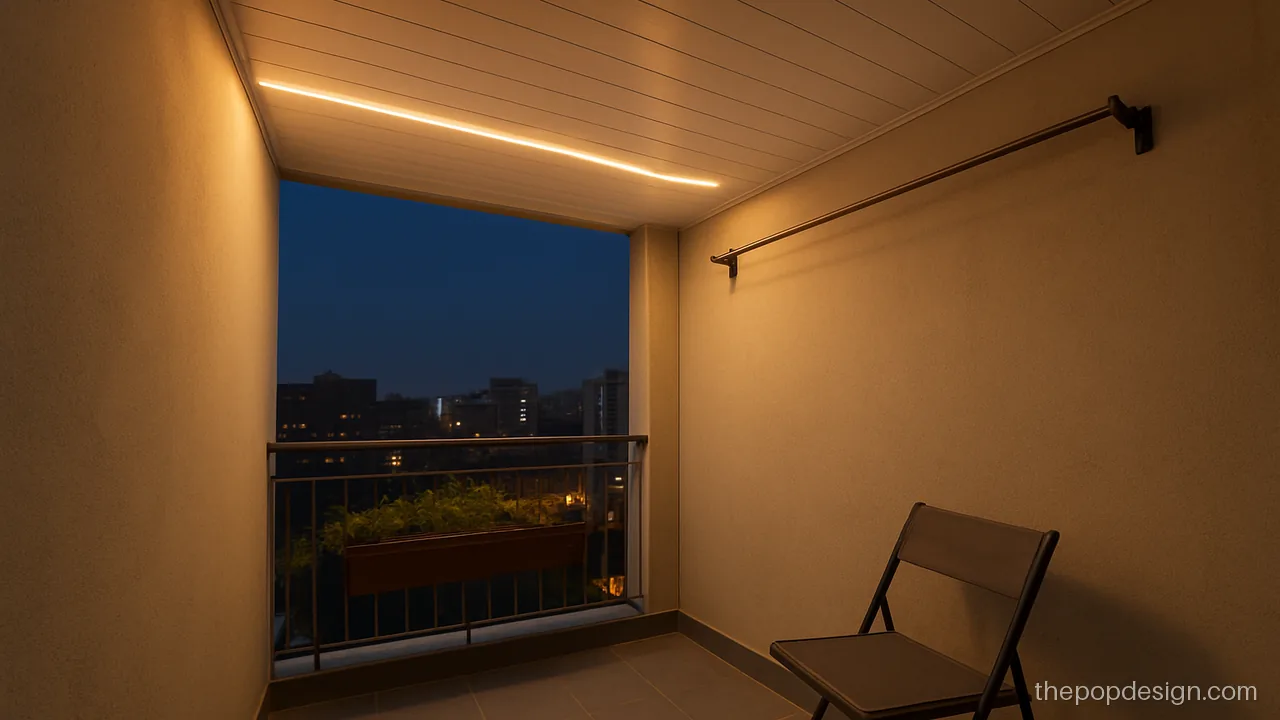
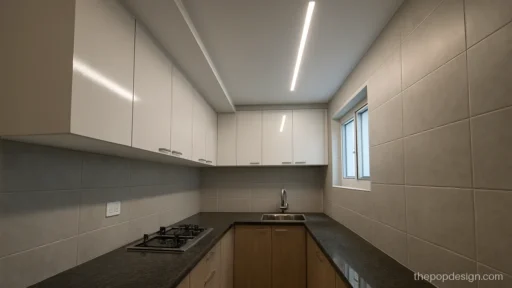
A flat PVC ceiling with one light line is easy to wash and does not mind damp. It is the most practical small balcony choice.
Contractor tip: Fix PVC panels on a rust-proof frame. Leave the cloth-drying hooks fixed into the slab, not the panels.
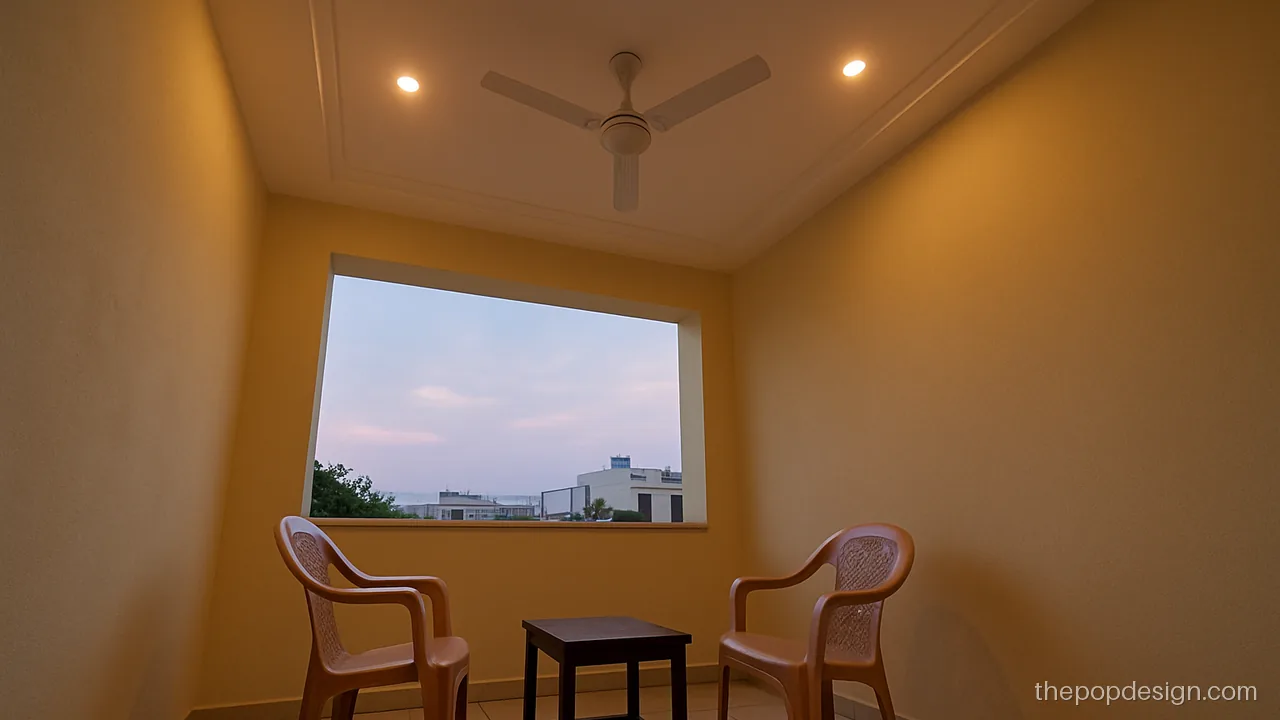
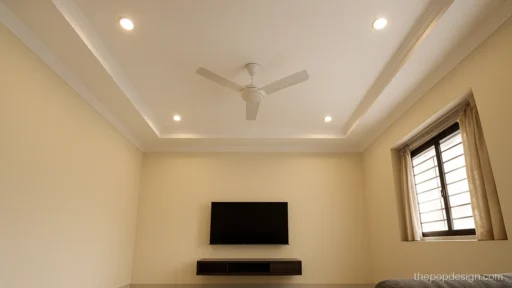
A slim border and a small fan make a sit-out usable on hot evenings. The fan hangs from a slab hook through the board.
Contractor tip: Fix the fan hook in the slab first. Use a short downrod and keep the border only 4 inches deep.
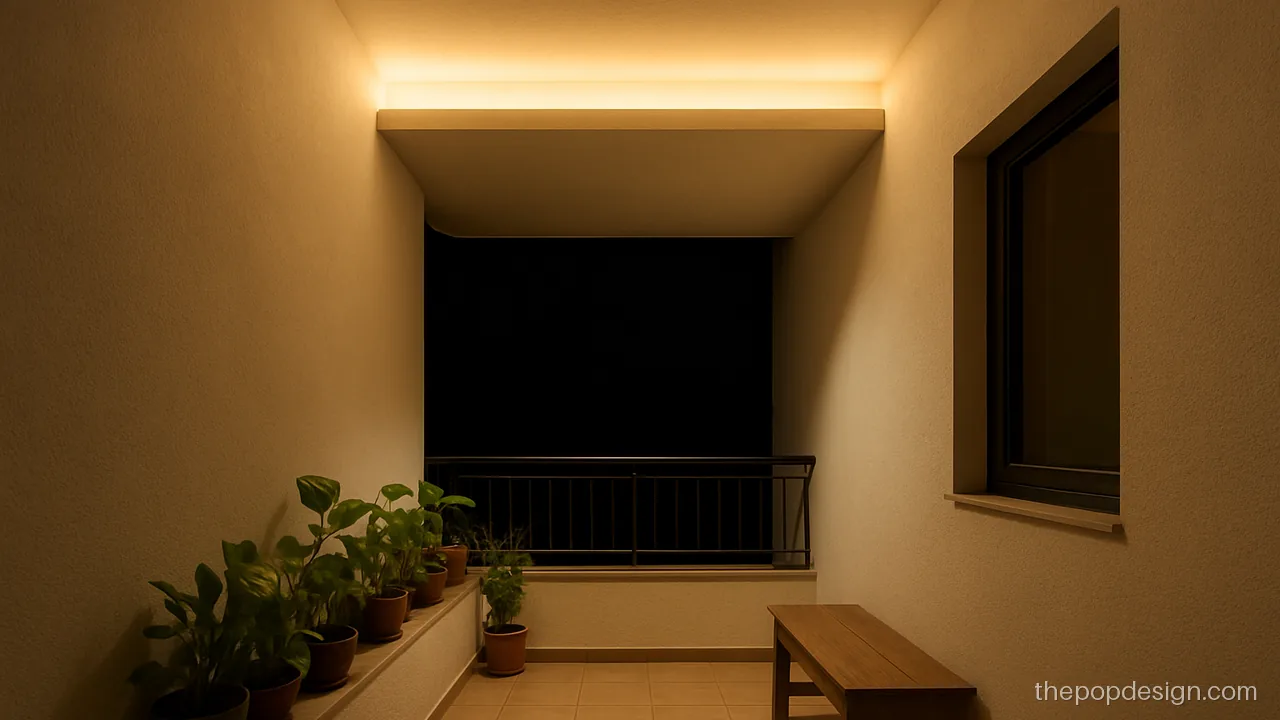
One curved corner softens a narrow balcony and gives space for a hidden light. It looks custom yet costs little.
Contractor tip: Use moisture-resistant board for the curve. Seal the cove top so dust and water do not settle.
Balcony Light POP Design
Outdoor lights need IP rated fittings and sealed wiring. Plan the switch inside the room so you do not reach out in rain.
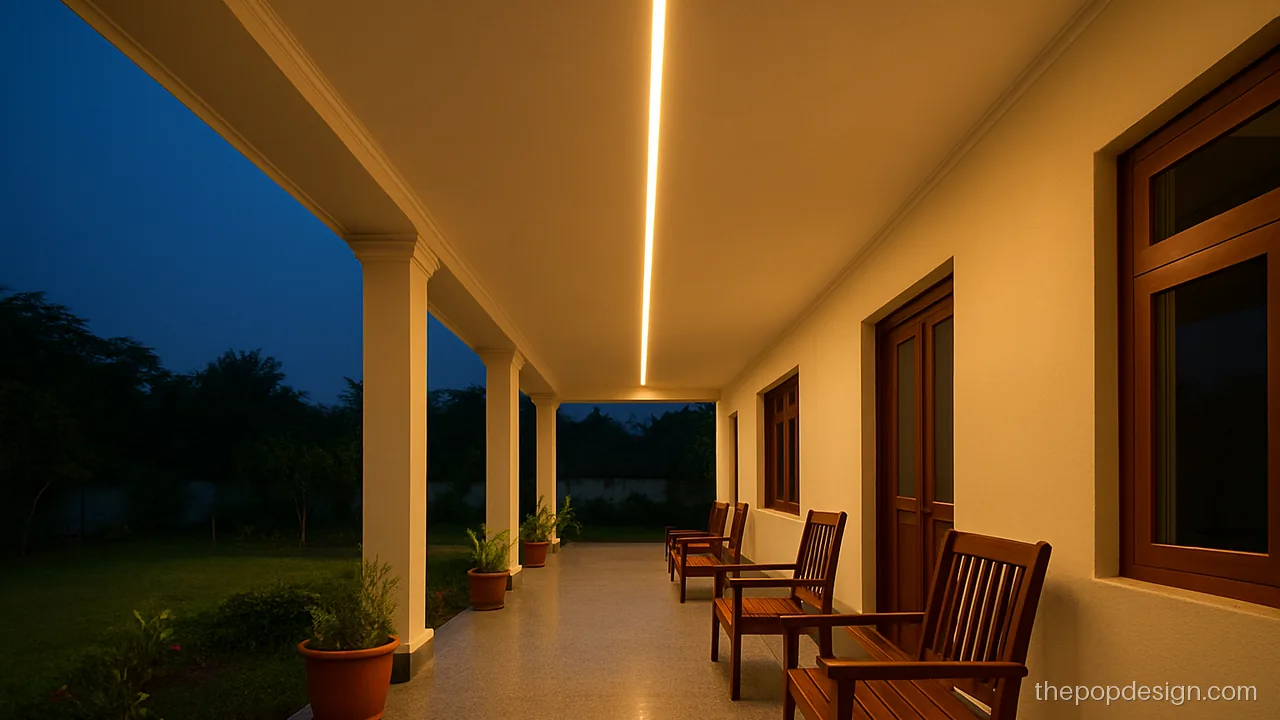
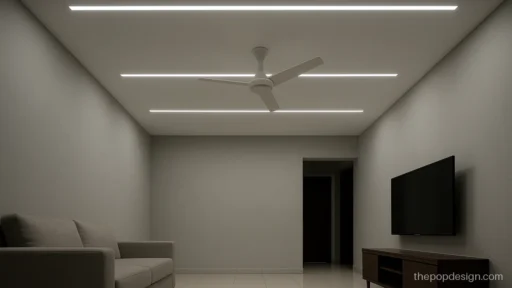
A recessed light strip down the middle gives an even wash across a long veranda. No spots are needed.
Contractor tip: Use IP rated LED strips in a sealed channel. Ask for wiring in conduit, with a drip loop.
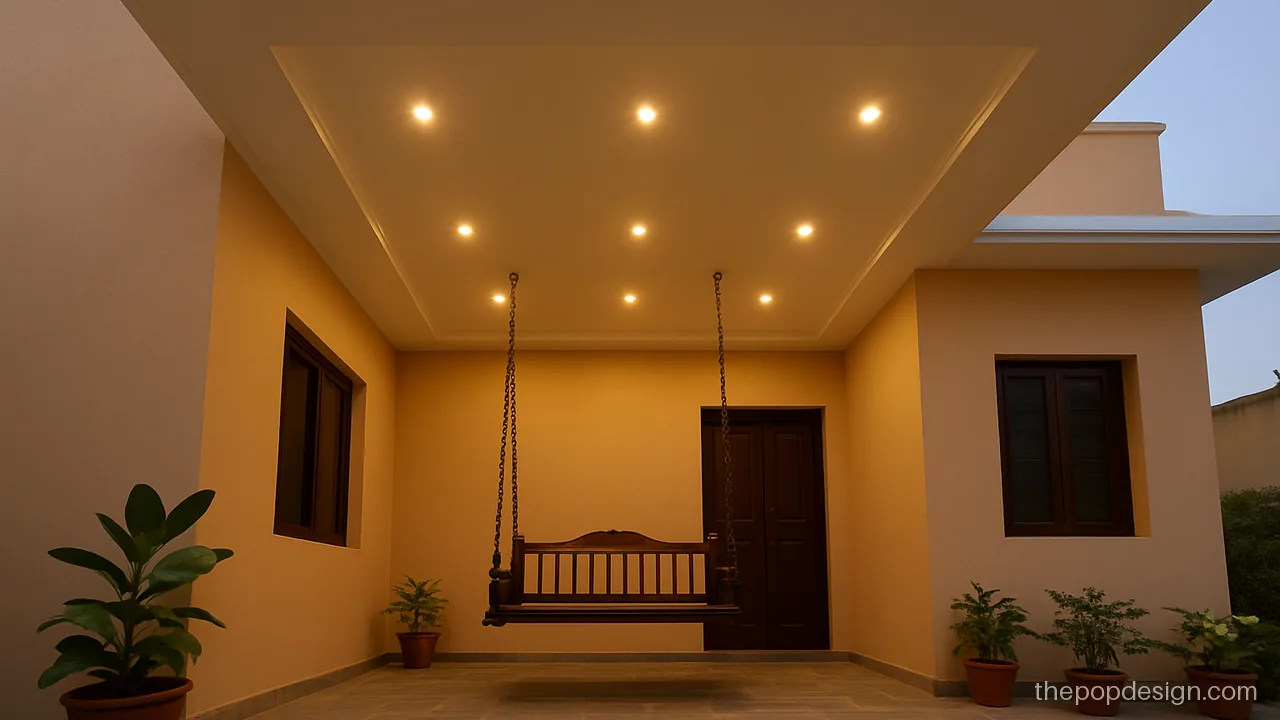
Six spots in two rows light a wide baranda without glare. Warm light looks welcoming from the street.
Contractor tip: Space spots in two equal rows. Keep spot holes 1 foot from the outer lip to avoid rain splash.
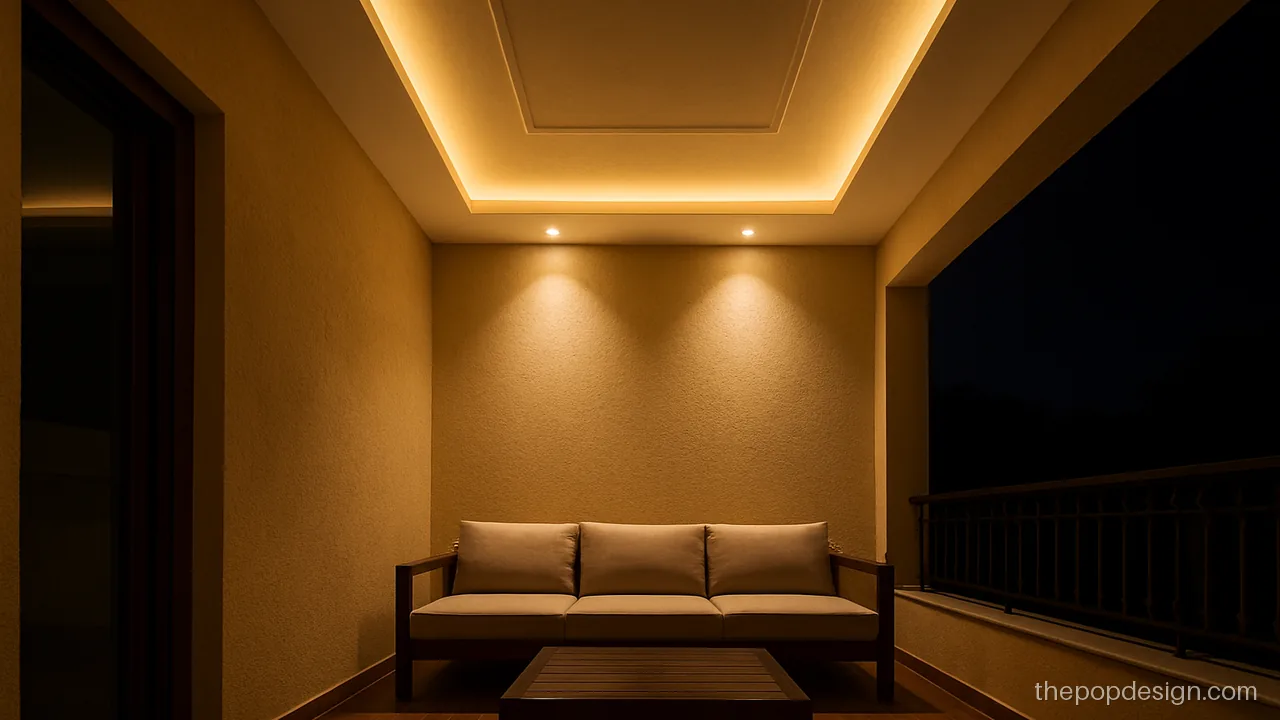
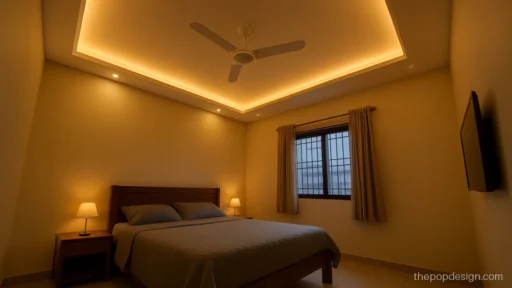
A cove on the inner side and wall wash lights on the main wall make the balcony feel like an extra room.
Contractor tip: Place the cove only on the inner side, away from rain. Use sealed outdoor drivers.
Balcony Edge and Fascia Design
The outer edge or chajja takes the most rain. A good fascia design throws water away and gives the front a finished line.
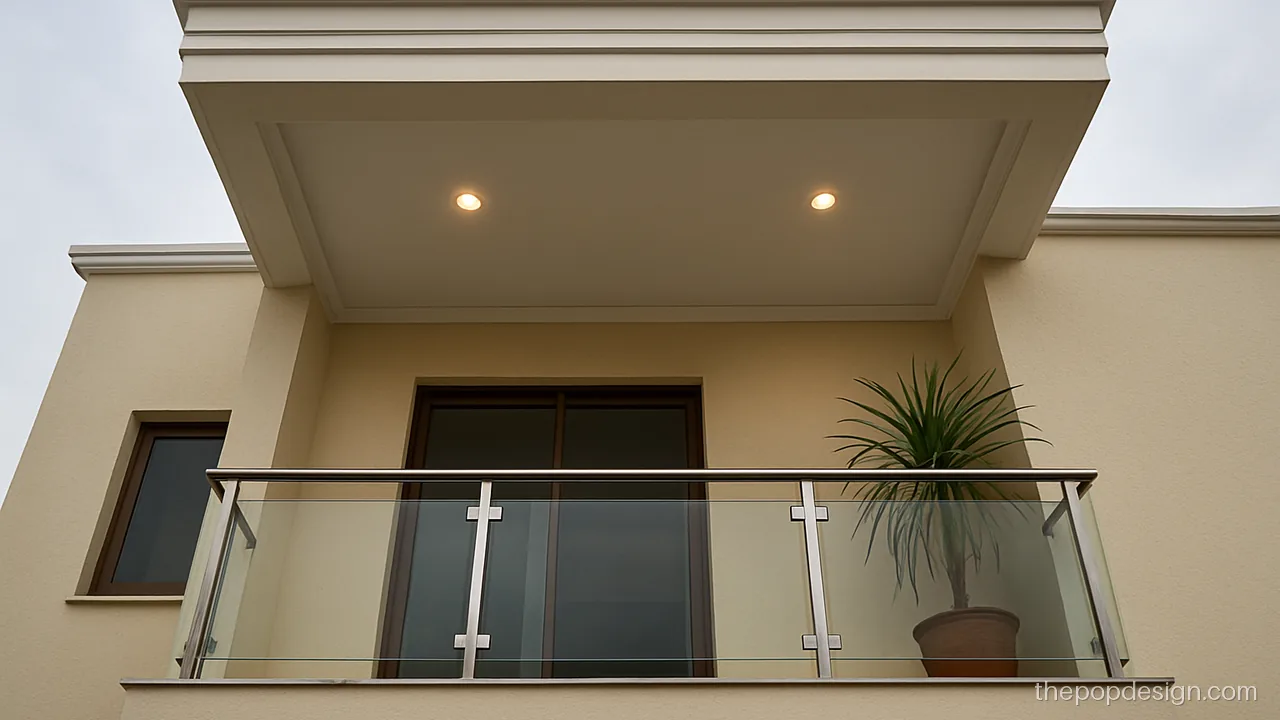
A stepped fascia with a drip groove under it stops water from running back onto the ceiling. It also gives a sharp front line.
Contractor tip: Cut a drip groove under the outer edge. Use cement-based exterior finish on the fascia, not POP.
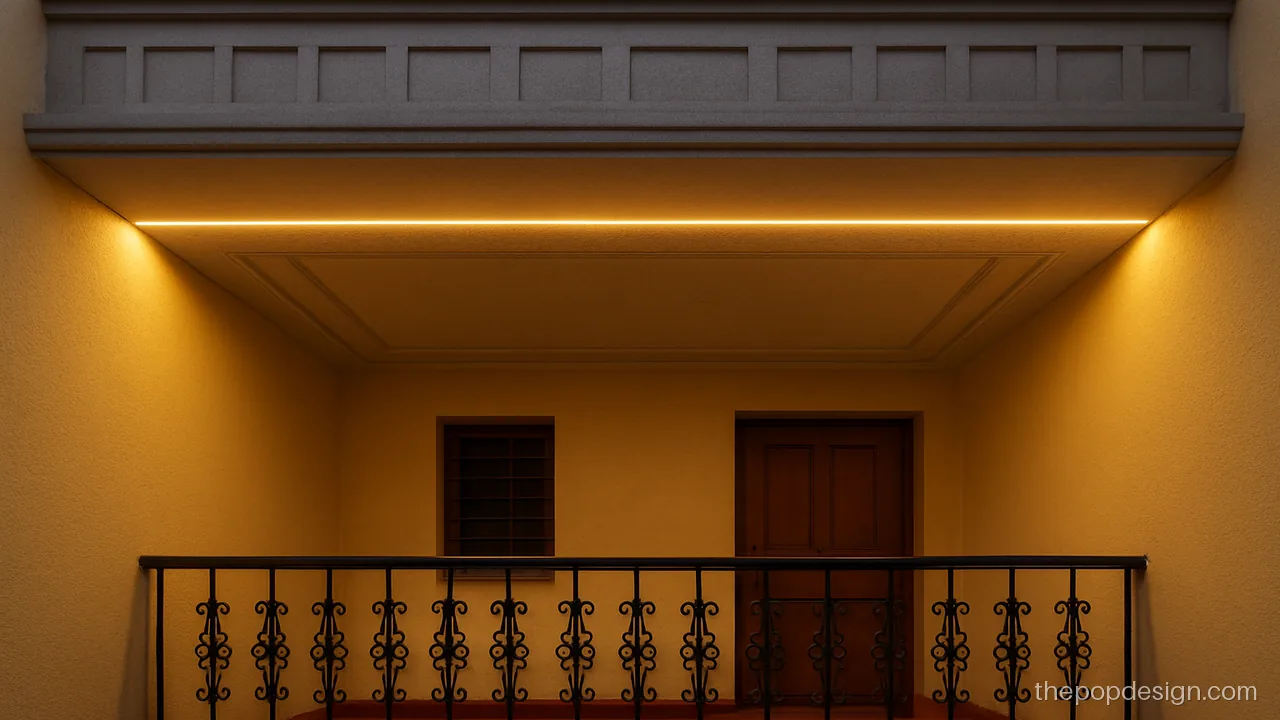
A plus minus band along the chajja edge adds shadow and depth to the front. It works on older houses being redone.
Contractor tip: Seal the chajja top with waterproof coat first. Fix the band on an exterior frame with sloped tops.
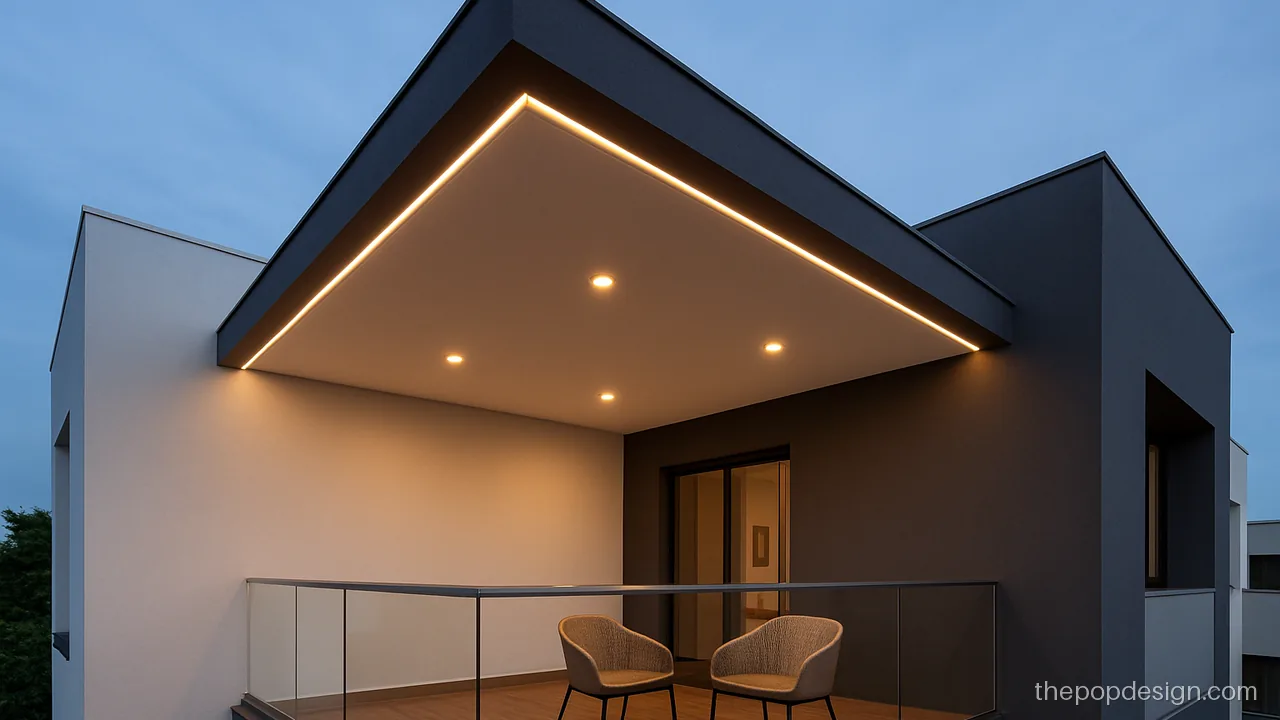
A two-tone edge that wraps a corner balcony makes the house front look modern. Grey on the edge hides dust and rain marks.
Contractor tip: Mitre the corner neatly and seal every joint. Use exterior paint in matte grey on the edge.
Waterproofing Before Any Balcony POP Ceiling Design
Plain POP does not like water. In an open or outdoor balcony, rain blows in and damp air sits under the slab. Before your balcony POP ceiling design starts:
- Check the slab above for leaks after one good rain.
- Waterproof the top of the slab or the floor above.
- Use moisture-resistant boards or PVC panels, and exterior grade putty and paint.
- Keep a drip groove on the outer edge.
- Use sealed outdoor light fittings and wiring in conduit.
If damp patches already show, fix the source first. New ceiling over a wet slab will crack and stain in one season.
Choosing a Balcony POP Design by Size and Use
| Balcony | Best choice | Notes |
|---|---|---|
| Small flat balcony | Flat PVC or slim border | Keep drop under 4 inches |
| Front balcony of a house | Raised panel or plus minus strips | Clean lines read well from street |
| Long veranda | Recessed strip or two rows of spots | Add a fan if used as a sit-out |
| Old chajja front | Fascia band with drip groove | Waterproof the top first |
Cost is area times the rate for the material and design, plus lights, waterproofing and exterior paint. PVC and simple borders are low budget. Curves, wood-look bands and wrap-around fascia cost more. More room ideas are on the hall POP design page.
POP design questions
Is POP good for a balcony ceiling?
Plain POP is not ideal where rain reaches. Use moisture-resistant board, PVC or cement-based finish on open parts. Inner covered parts can take POP if the slab is waterproof.
Which is the best front balcony POP design?
A raised panel with warm spots or a plus minus strip design looks clean from the street. Keep shapes simple so dust and water do not collect.
Can I put a fan in a veranda POP design?
Yes. Fix the hook in the slab and pass the downrod through the board. Use a fan meant for semi-outdoor use if rain can reach it.
Is PVC POP design for balcony a good idea?
PVC is water-proof, light and easy to wash, so it suits small balconies well. It looks plainer than POP, so add one light line or a wood-look band.
How do I stop cracks in a balcony ceiling?
Waterproof the slab first, tape all joints, and let the work cure fully before paint. Use exterior putty and paint, and keep a drip groove at the edge. See porch POP design for similar tips.