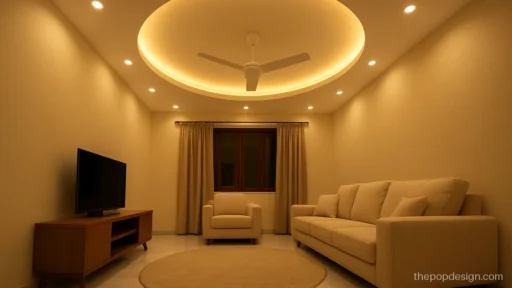
Latest POP Design: New Ceiling Ideas for Hall and Bedroom
- 18 designs
- By style
- Updated 07 Oct 2026
This latest POP design gallery shows what home owners are asking their POP wala for right now. The look has moved away from heavy layers and towards clean borders, slim light lines and a warm cove that does not glare.
Every picture here is an original design. Under each one you get the room size it suits, the lighting, a budget label and a short note to show your mistri before work starts. If your ceiling is low, start with the simple POP designs, and if you want a bolder layered look, see the plus minus POP design page.
Hall POP Design Latest Ideas
These are the hall ceilings we are seeing most on sites this season. Each one keeps the fan or jhumar on a slab hook and leaves enough flat space so the hall does not feel crowded.
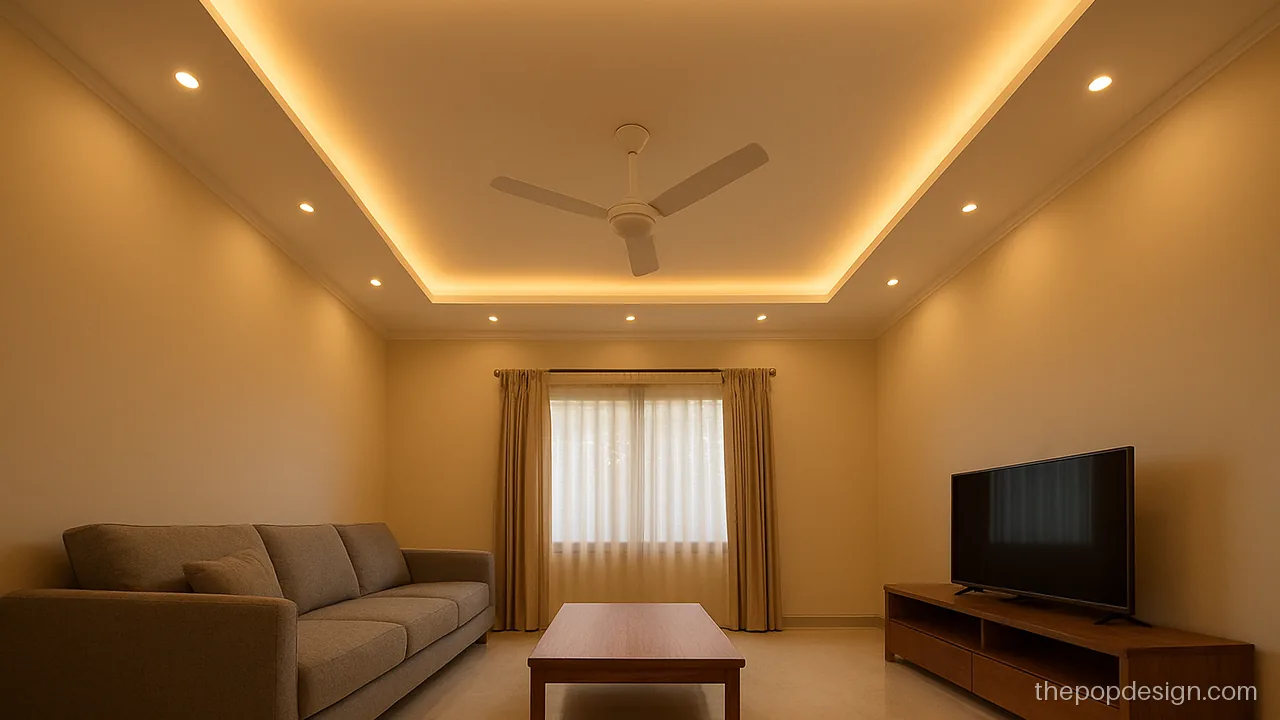
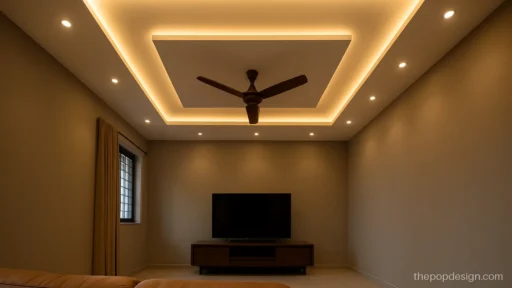
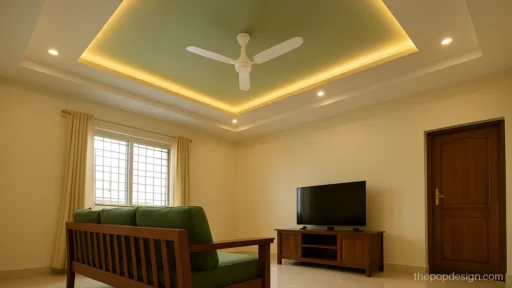
A floating border with a shadow gap looks light even in a busy hall. The double cove gives soft light for evenings without any glare.
Contractor tip: Keep drop at 6 inches on the border. Ask for a 2 inch shadow gap and an even cove depth all round.
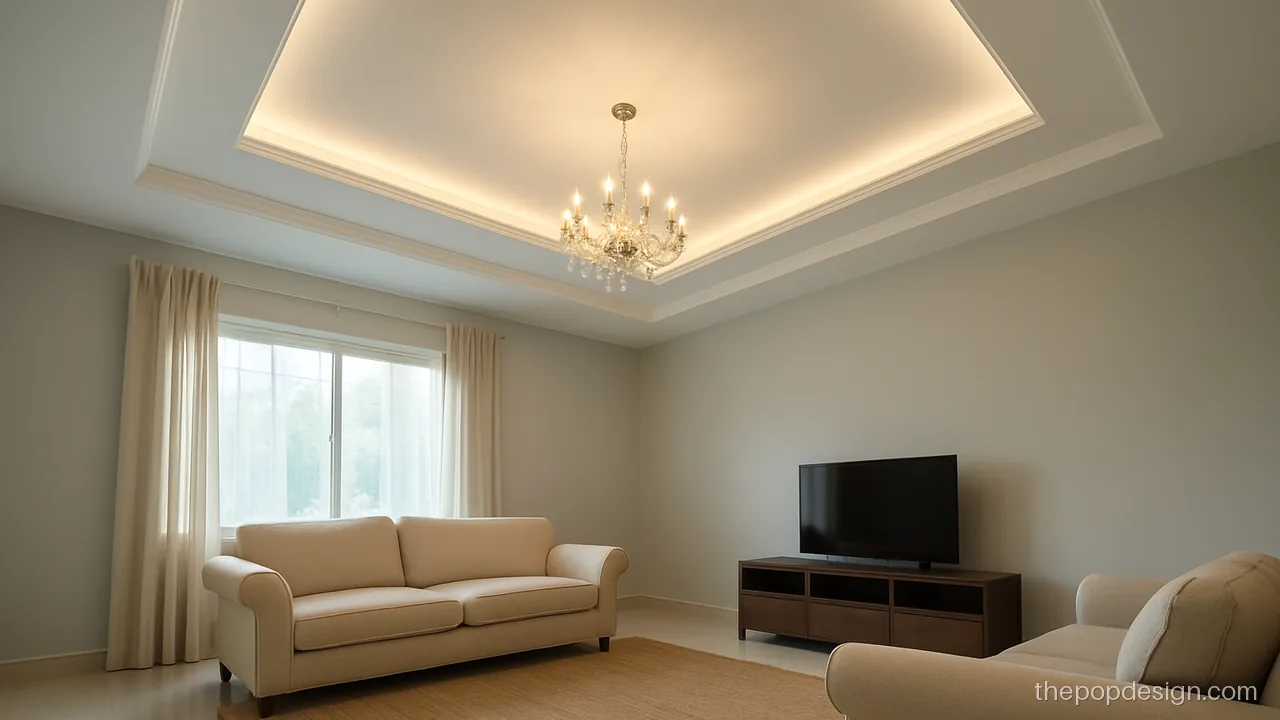
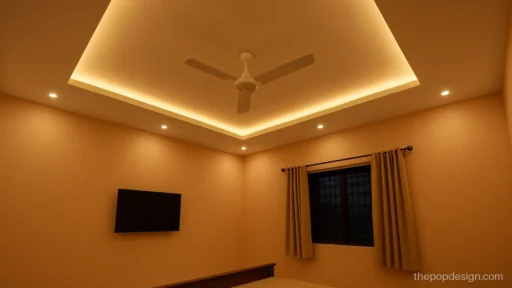
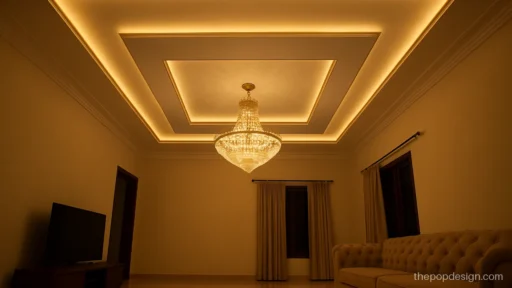
Two offset rectangles break the boxy look of a square hall. The jhumar sits where the boxes overlap, so it becomes the centre point.
Contractor tip: Fix the jhumar hook in the slab first. Mark both rectangles on the slab with chalk before channel work.
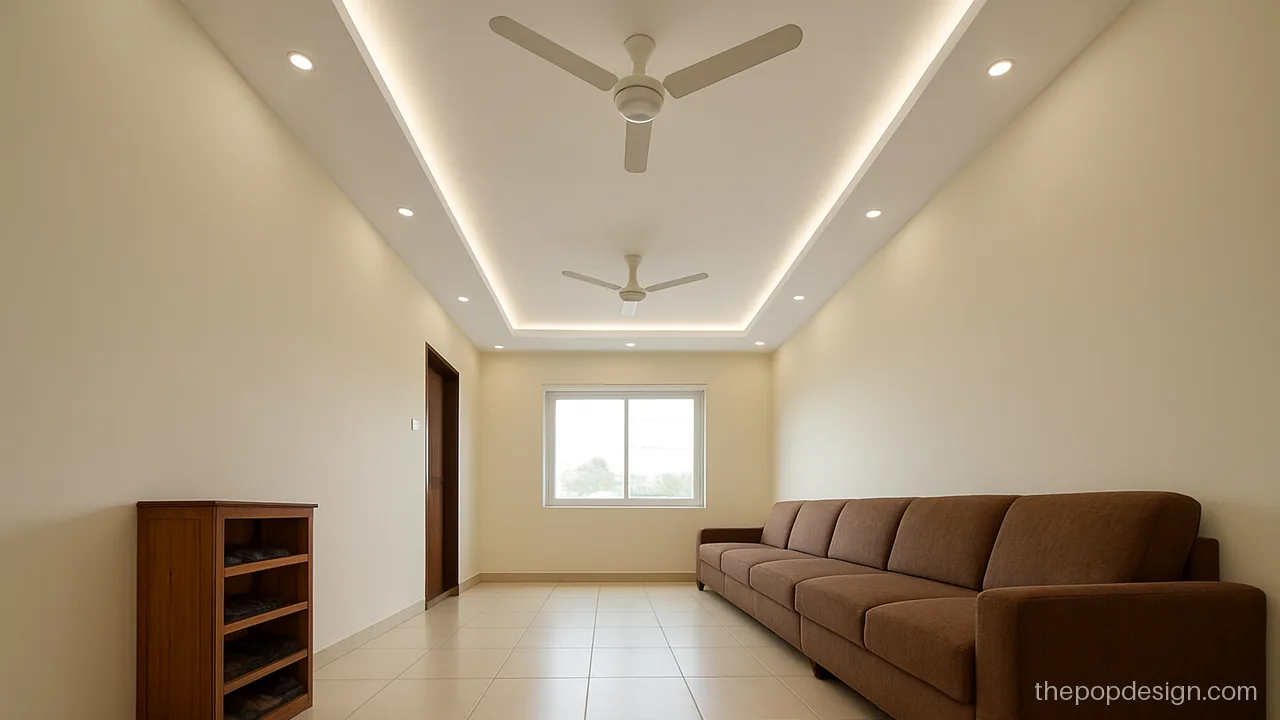
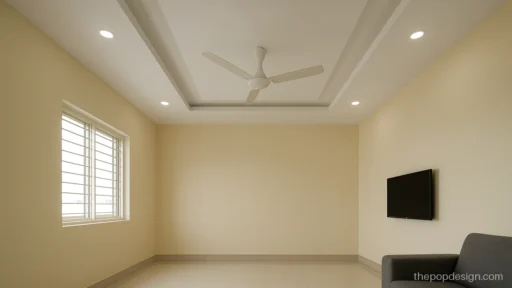
A long hall needs two fans, and this slim border keeps both clear of the cove.
Contractor tip: Space both fan hooks evenly on the long side. Keep border width 2 feet and check level with a water tube.
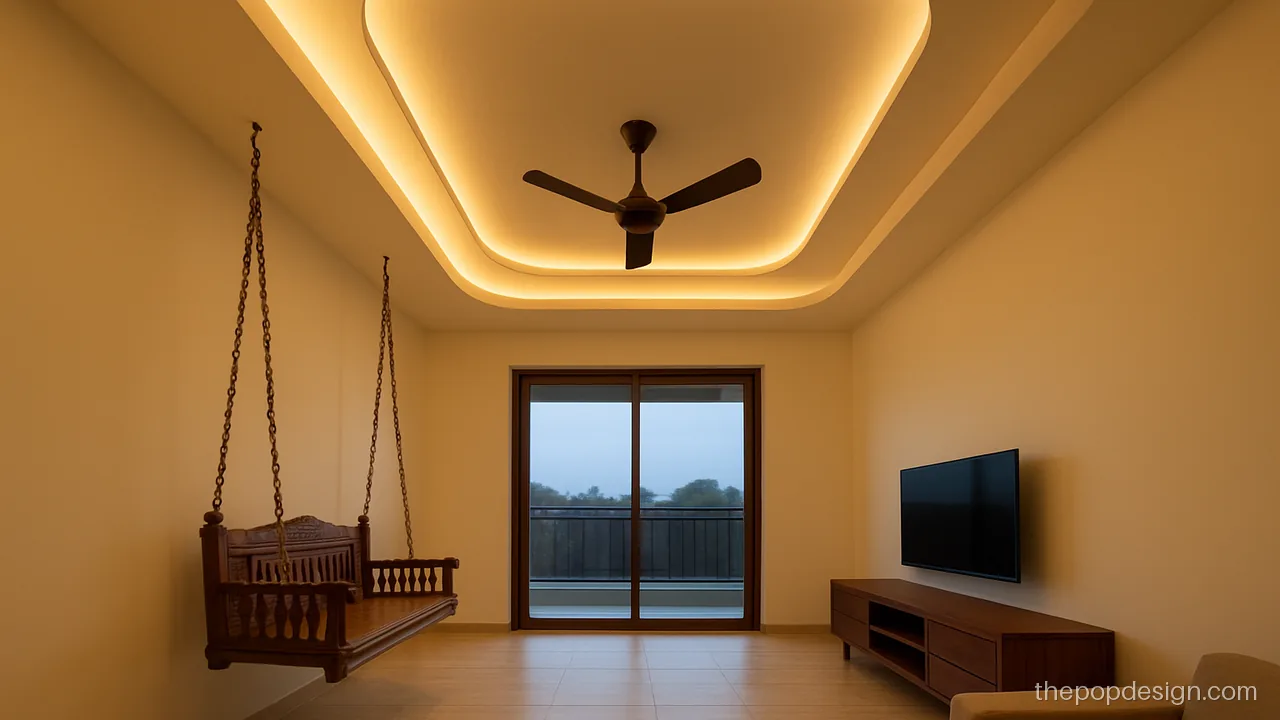
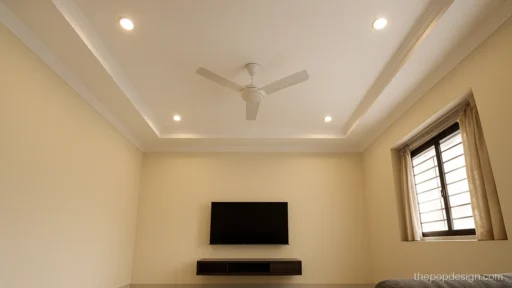
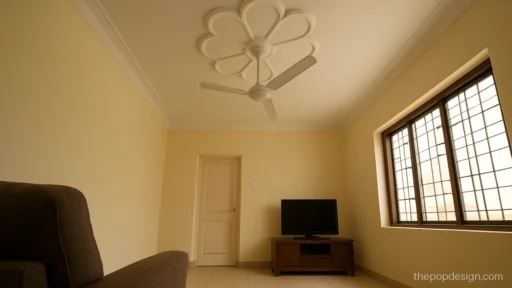
Rounded corners take the hard edge off a big ceiling. This is one of the easiest ways to make an old hall look current.
Contractor tip: Ask for a smooth radius at each corner with a bent channel. Check curves with a template before punning.
New POP Ceiling Design for Bedroom
Bedrooms need softer light and less drop. These new POP ceiling design ideas keep the bed zone calm and put the bright light over the dressing or wardrobe side.
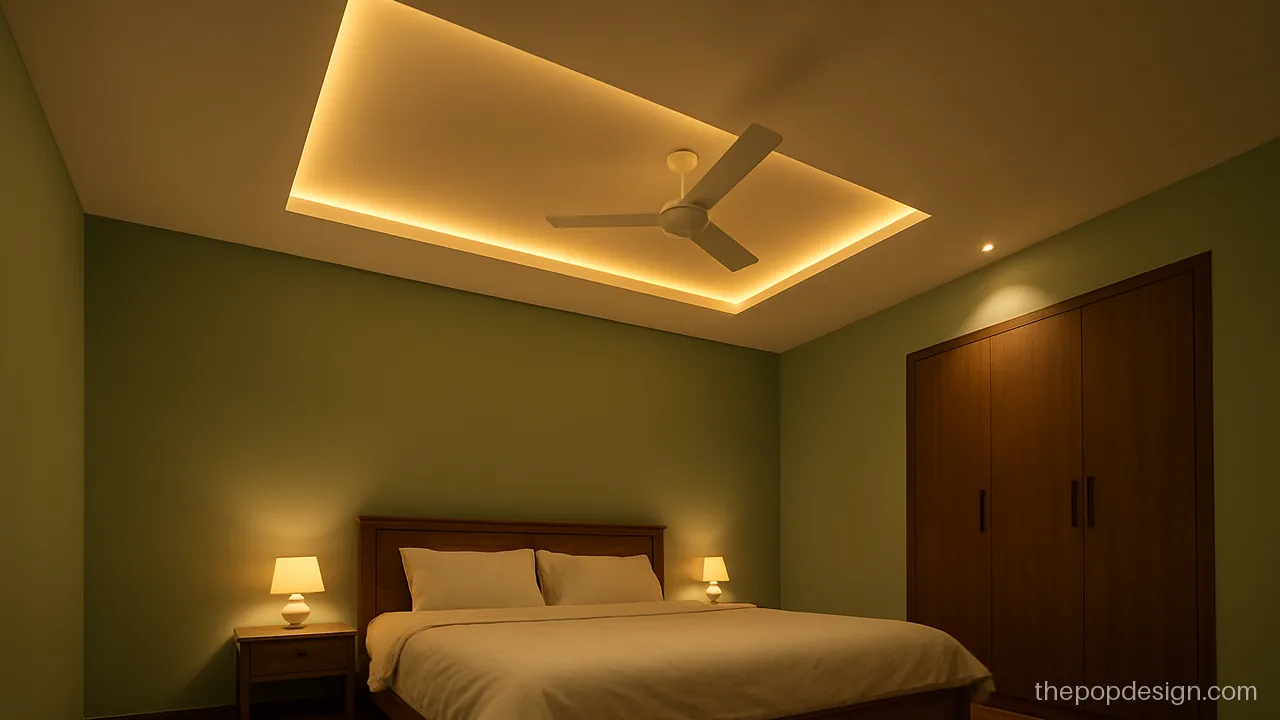
The raised panel sits right above the bed and glows softly. The rest of the ceiling stays plain, so the room feels taller.
Contractor tip: Centre the panel on the bed, not the room. Keep total drop under 5 inches if the ceiling is below 10 ft.
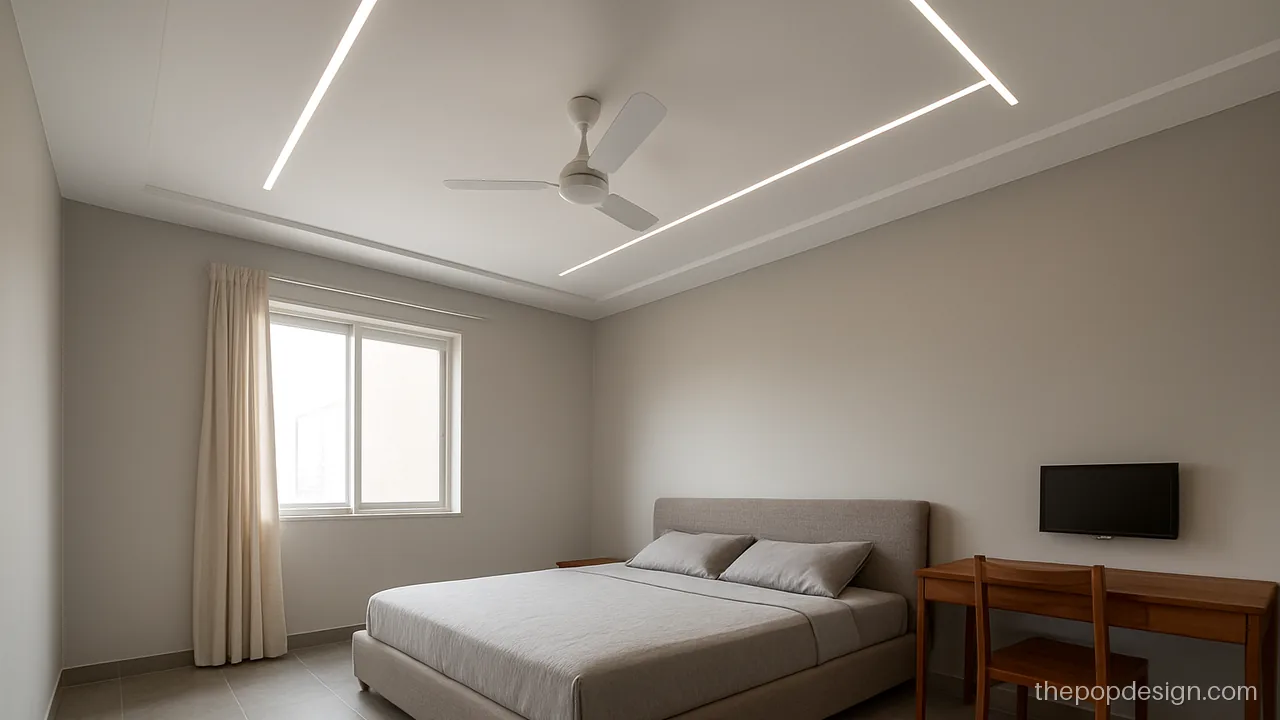
Three diagonal light lines add movement without adding depth. It is a good pick for a young couple or a teen room.
Contractor tip: Mark the diagonals from wall corners so they look straight. Ask for diffuser covers so the LEDs do not show dots.
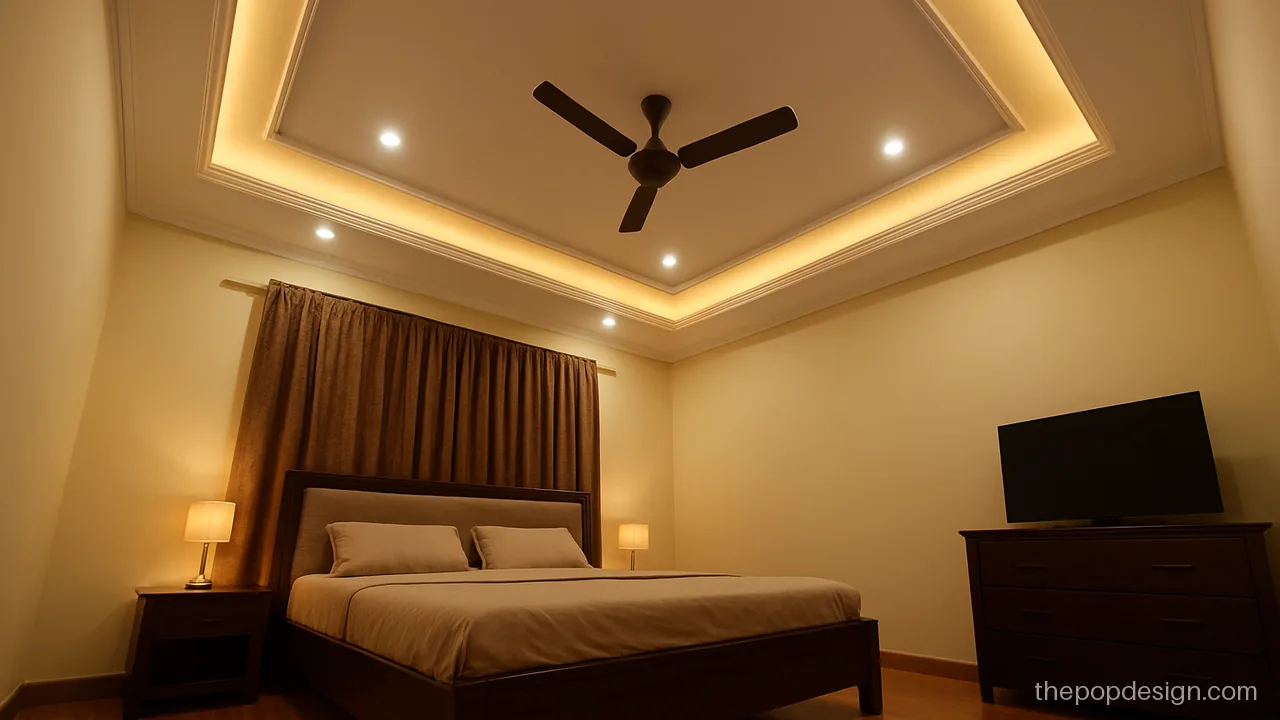
A taupe inner band gives warmth without making the room dark. The two step edge suits rooms with a ceiling of 10 ft or more.
Contractor tip: Paint the inner band only after full drying. Check both steps run parallel to the wall at every corner.
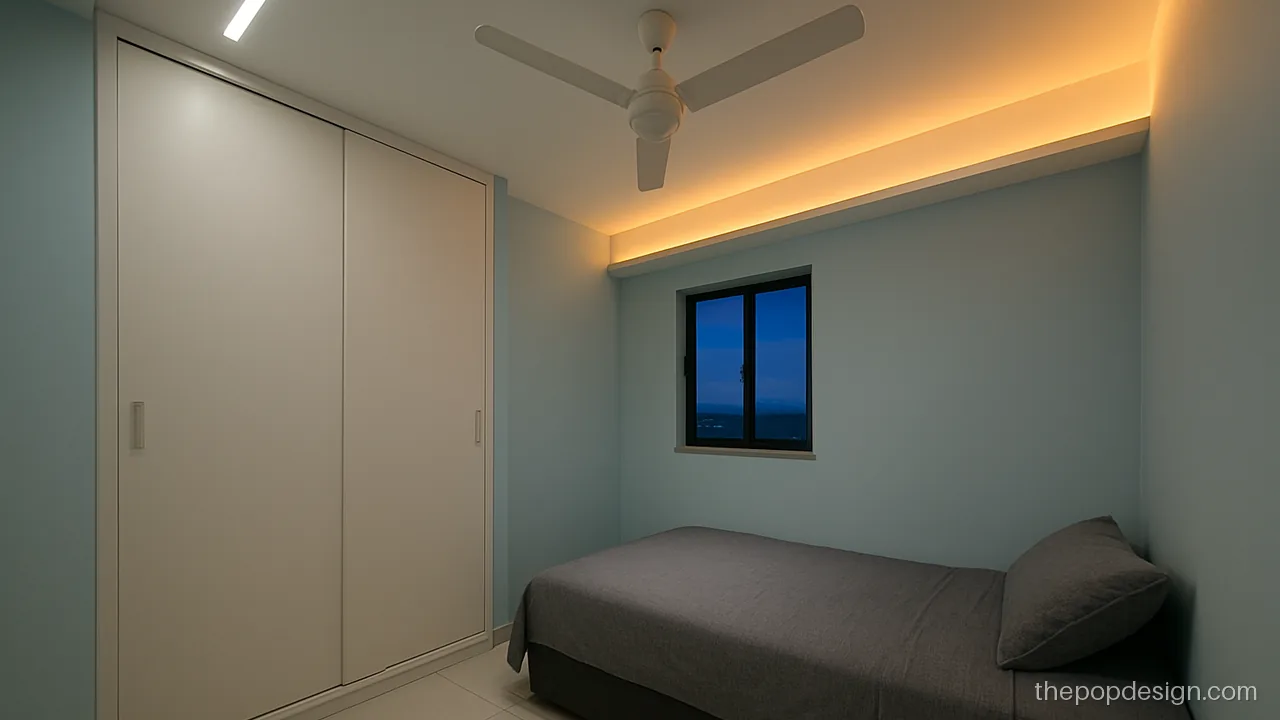
One deep strip runs along the wardrobe wall to light the clothes well. The bed side stays plain and dim for sleep.
Contractor tip: Run the strip 18 inches away from the wardrobe front. Ask for a separate switch for the strip and the cove.
Trending POP Design with Linear Lights
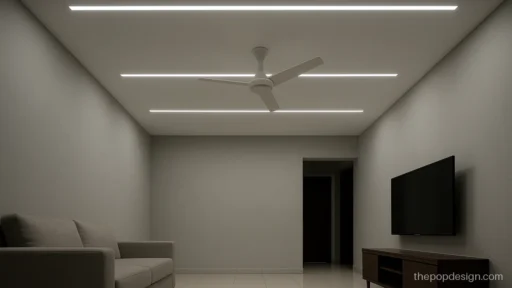
Linear profile lights are the most asked-for change right now. They use less drop than a cove and look neat even in flats with a 9.5 ft ceiling.
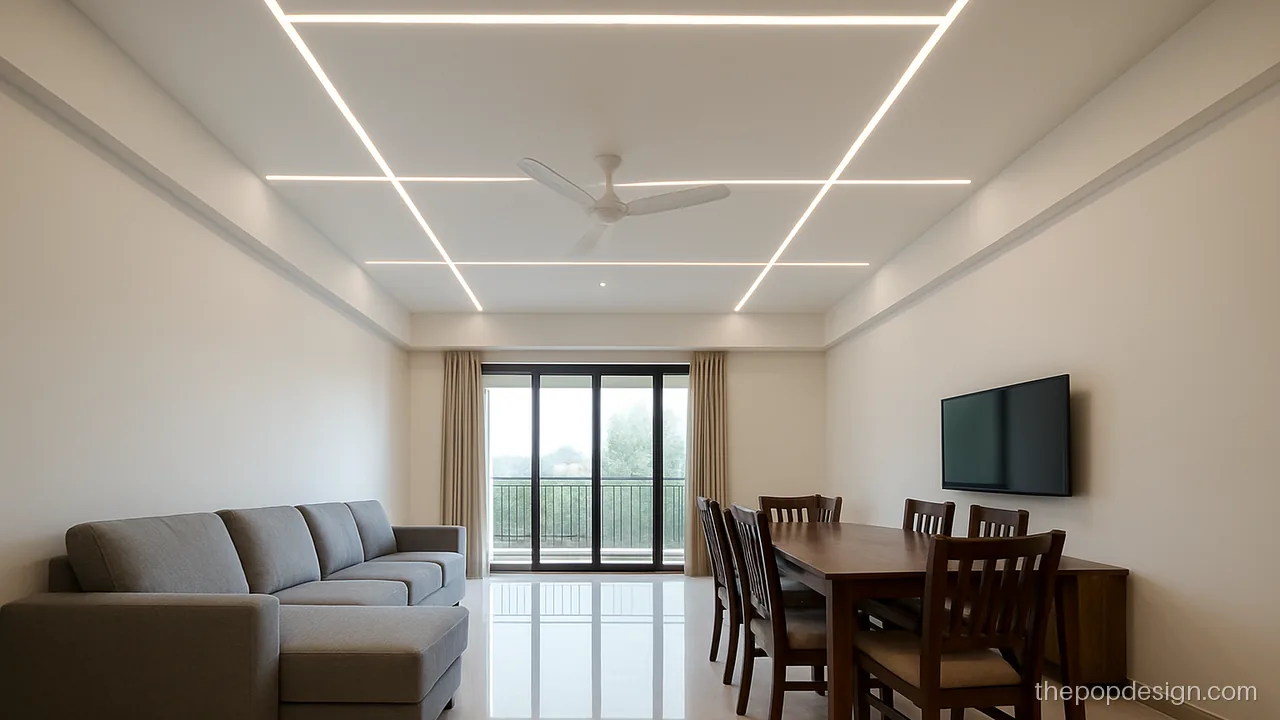
A loose grid of light lines gives even light across the room.
Contractor tip: Fix a GI channel behind every light line. Ask for the driver box in a reachable spot above a service panel.
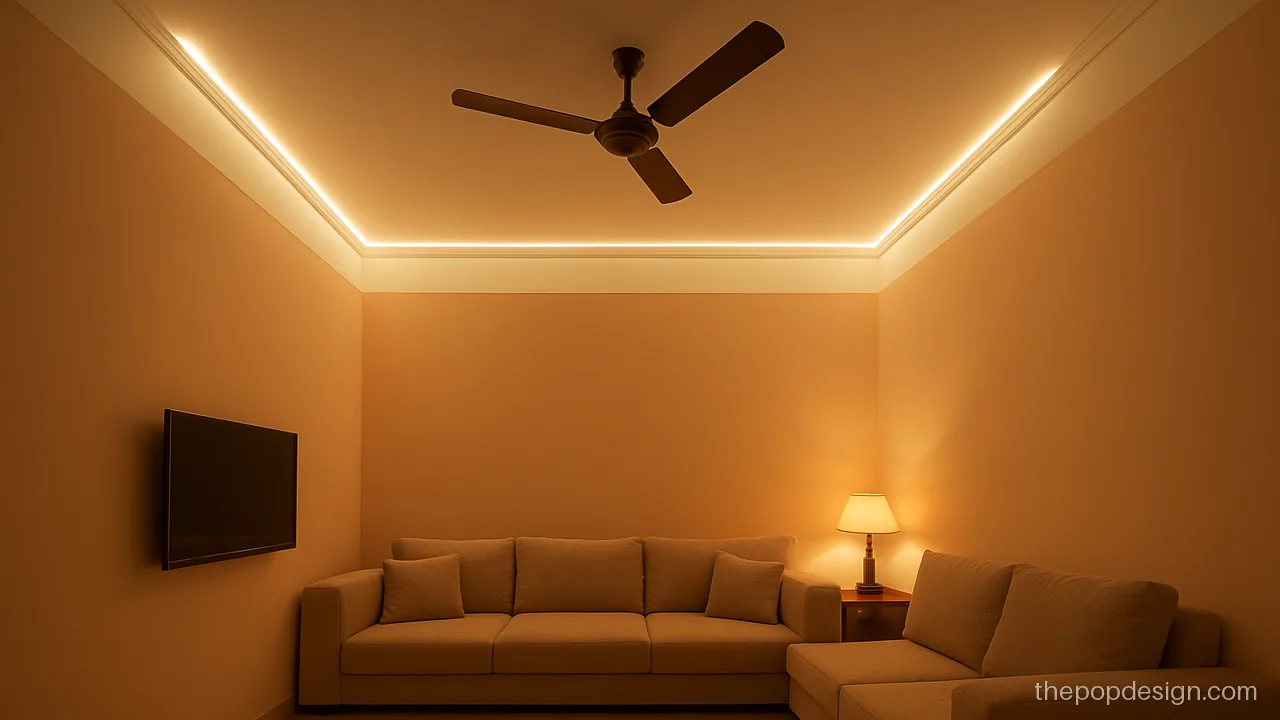
An L-shaped light line marks the sitting corner and leaves the rest of the hall simple.
Contractor tip: Join the two arms of the L at a true right angle. Keep the line 2 feet in from the wall.
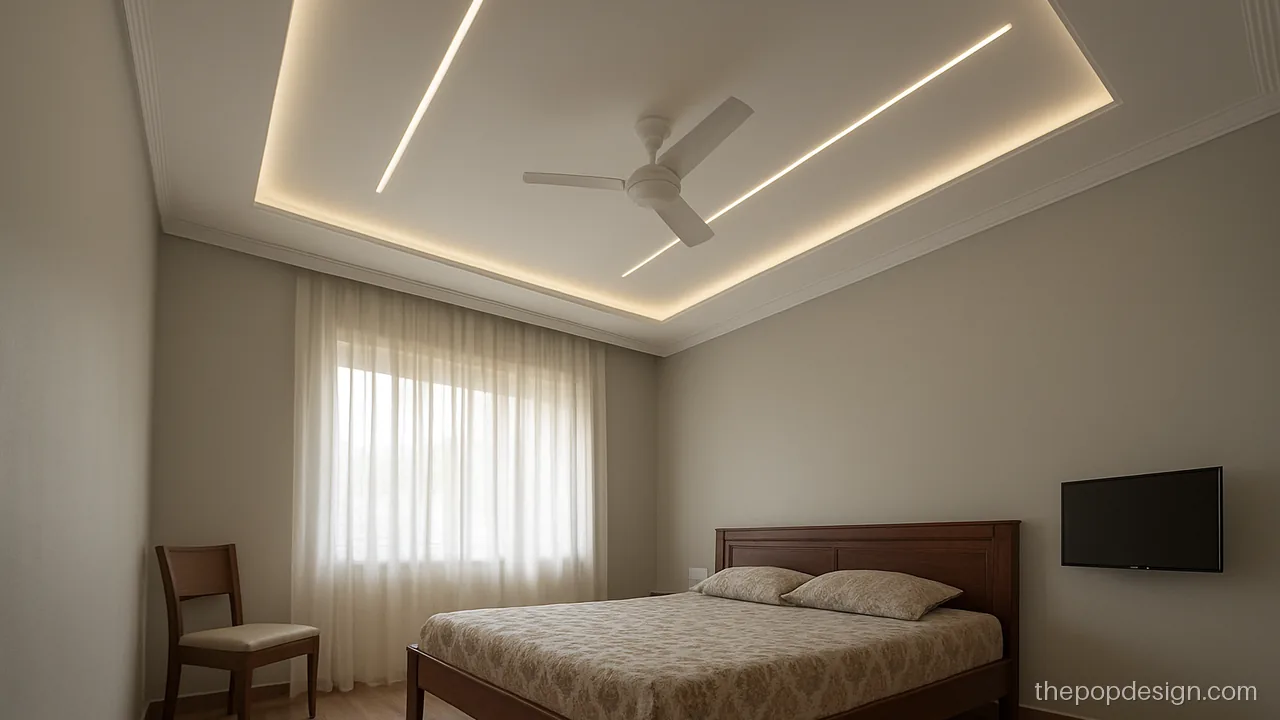
Three parallel lines in a recessed channel look clean from the bed and from the door. The flat ceiling keeps cracks to a minimum.
Contractor tip: Keep equal spacing between lines and centre the set on the bed. Use diffuser profiles so light looks even.
Top 10 POP Design for Hall: Our Best Picks
If you only shortlist a few, start here. These are the best POP design for hall ideas from the gallery, chosen for easy upkeep, good light and fair cost.
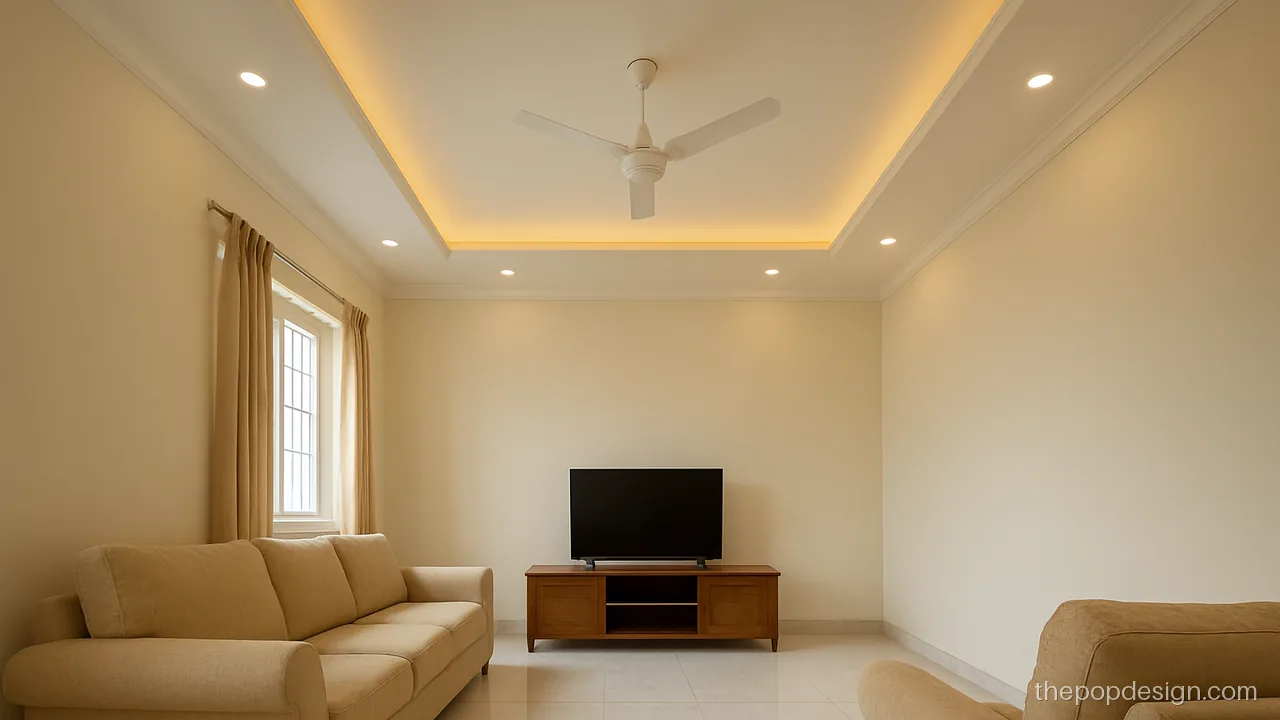
Plain centre, wide cove and nothing fussy.
Contractor tip: Ask for a 5 inch cove lip so LED strips stay hidden. Check corners are square with a try square.
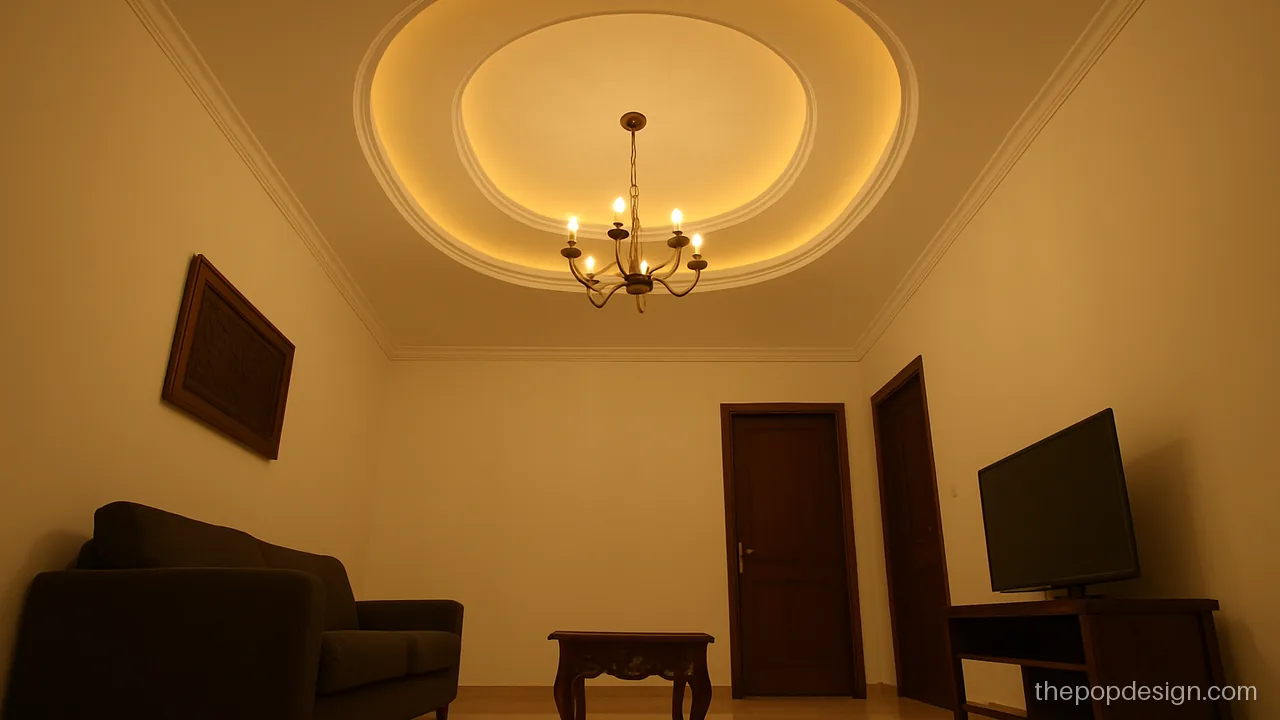
The stepped oval softens a long rectangular hall. A simple metal jhumar hangs in the middle on a slab hook.
Contractor tip: Use a full size oval template on the slab. Confirm jhumar weight and hook strength before closing the ceiling.
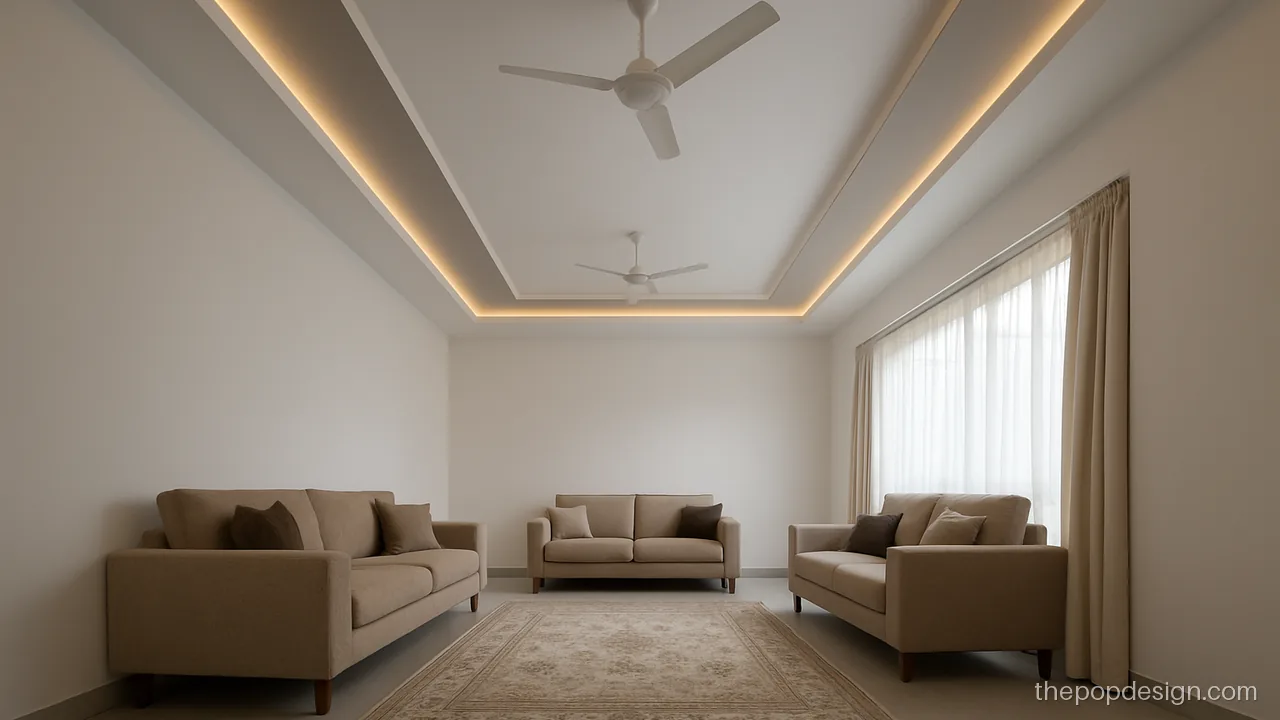
A soft grey band frames the ceiling and hides small level errors. Two fans keep a large hall cool on hot afternoons.
Contractor tip: Paint the grey band in matte only. Keep both fans at least 3 feet from the band edge.
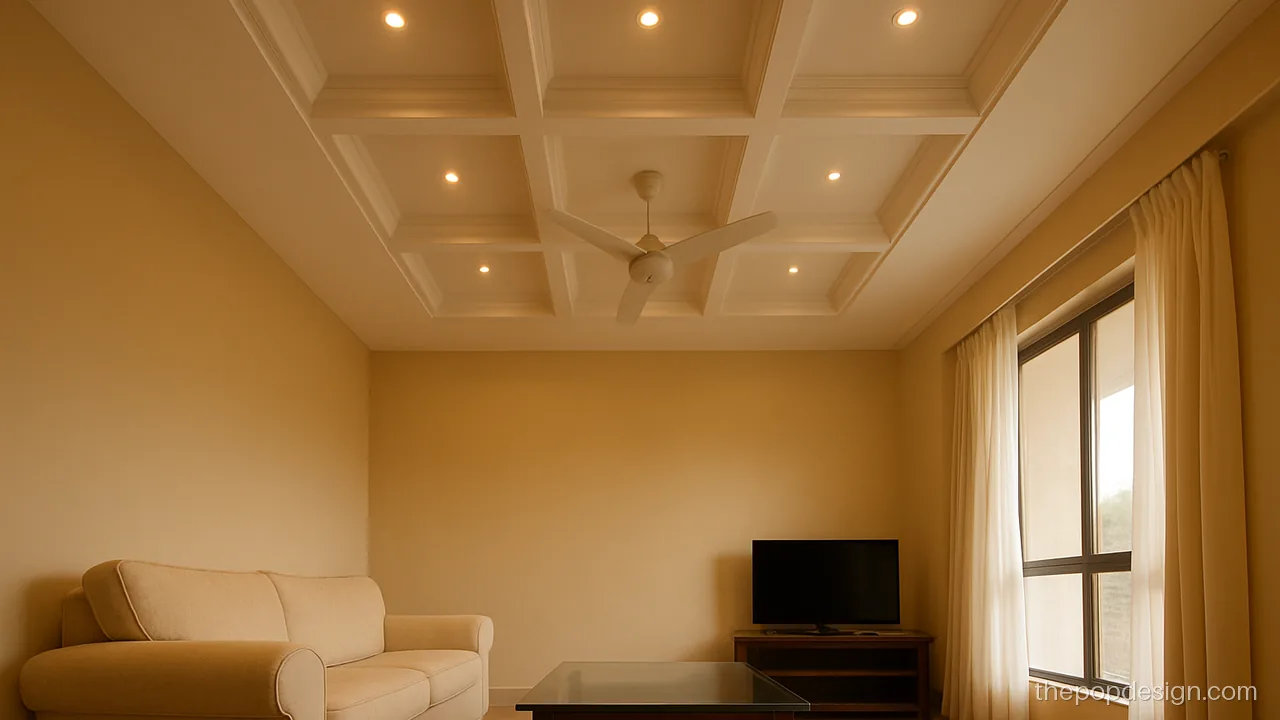
Shallow coffers add depth without much drop. Each square has one spot, so the hall gets even light from end to end.
Contractor tip: Keep coffer depth at 2 inches only. Mark all nine squares from the room centre so gaps stay equal.
New POP Design with Wood Accents
Wood strips and panels are a big part of the latest look. Use real veneer or laminate on a board, fixed to the frame, and keep wood away from damp walls.
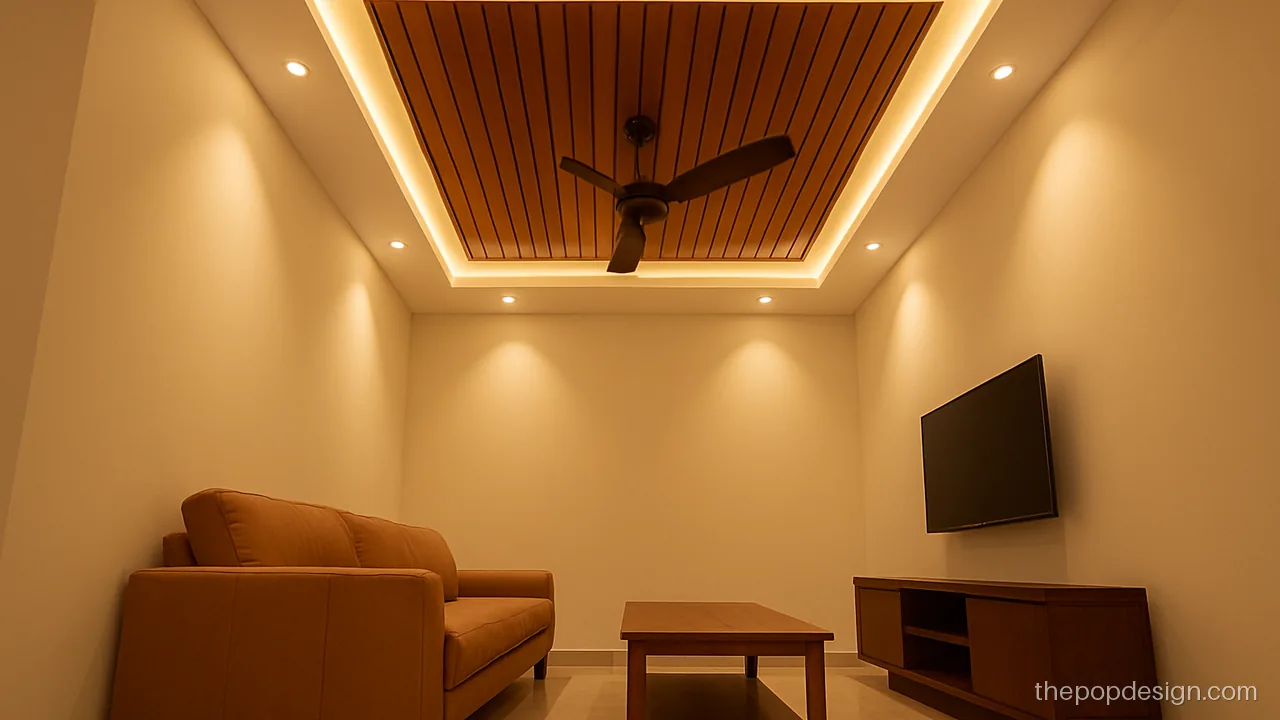
Wooden slats in the centre warm up a white ceiling. The POP border hides the light and the frame for the slats.
Contractor tip: Fix slats to a separate frame, not to POP. Leave the fan downrod clear through a gap in the slats.
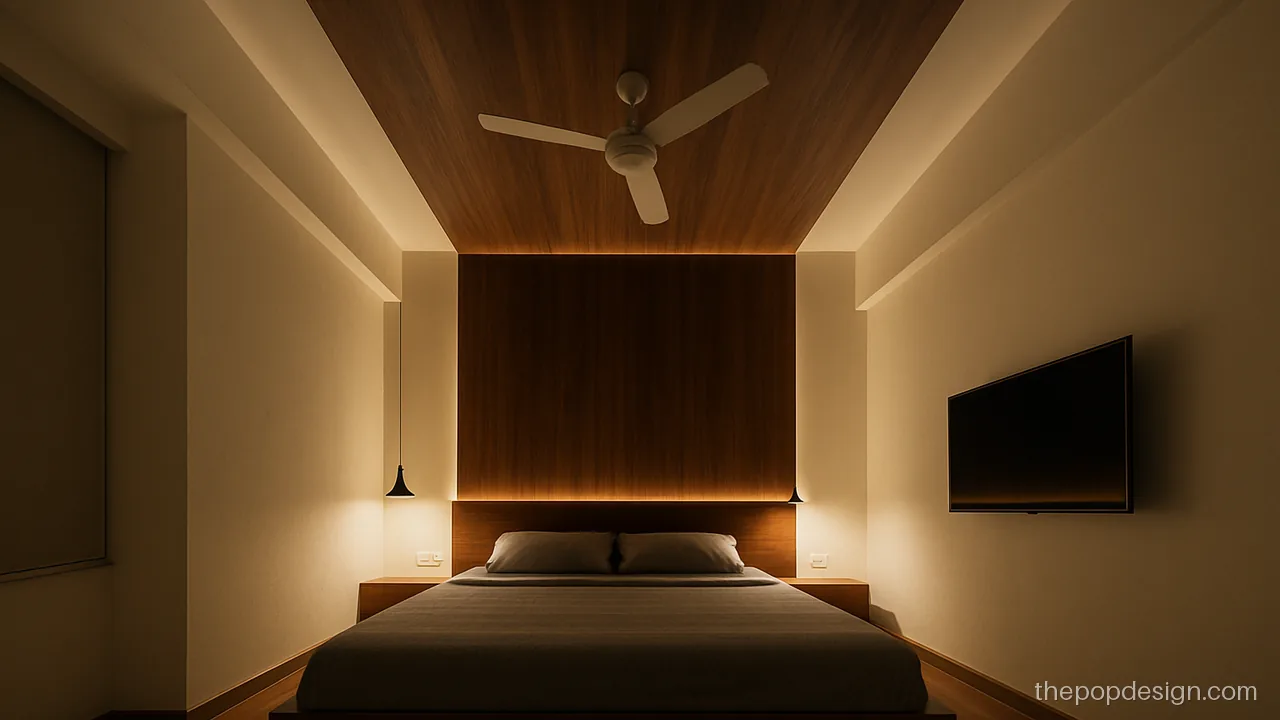
The wood strip runs up the wall and across the ceiling, so bed and ceiling read as one design.
Contractor tip: Line the wood strip with the bed centre. Seal all wood edges and keep it 1 inch off the wall plaster.
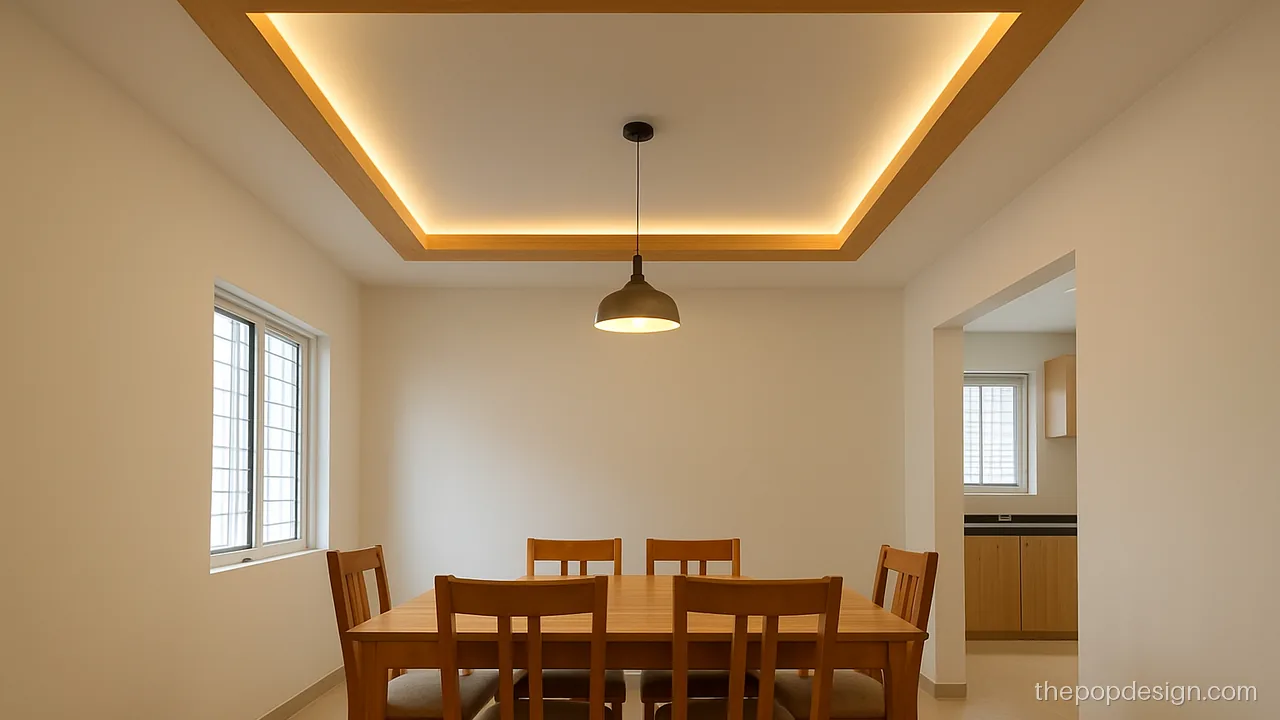
A wooden frame around a grey centre suits dining areas and open halls. The border also hides the AC pipe run neatly.
Contractor tip: Box the AC pipe inside the border. Hang the dining pendant from a slab hook, not the wood frame.
How to Pick the Best POP Design for Your Hall
Start with ceiling height, not with a photo. Measure from floor to slab at three points.
- Under 9.5 ft: use a slim border, a single light line or a floating panel. Keep drop under 5 inches.
- 9.5 to 10.5 ft: one step with a warm cove, or a shallow two step design.
- Above 10.5 ft: layered designs, an oval with a jhumar, or wood slats work well.
Next, mark where the sofa, TV and dining table will sit. The best ceiling follows the furniture, not the room centre. For a full list by room area, see POP design by room size.
What to Tell Your POP Wala Before Work Starts
- Show the exact photo and agree the drop depth in inches.
- Fix fan and jhumar hooks in the slab first. The downrod passes through the POP; nothing hangs from POP.
- Agree channel spacing (about 2 feet) and that joints get mesh tape.
- Mark every light cut-out and the driver box before punning.
- Check the level line with a water level before you pay the next part.
- Let the POP dry for about a week or more, then primer, then two coats of paint.
Cost is worked out as area times the rate for that design type, plus extras like profile lights, cove strips, wood and paint. A plain border costs less than layered or curved work. For how rates are built up, read the POP design price guide.
Is This Look Here to Stay
Clean borders, warm cove light and a calm centre still look right years later. Bright colours and heavy layers date fast, so keep colour to one band. Ideas on that are on the POP colour design page, and for modern flat looks see modern POP design.
POP design questions
What is the latest POP design for hall right now?
Slim borders with a warm cove, floating panels with a shadow gap and slim profile light lines are the most asked-for this season. Wood slat panels in the centre are also popular.
Which is the best POP design for a low ceiling hall?
Use a thin peripheral border or one profile light line. Keep the drop under 5 inches. Avoid deep coves and jhumars that hang low, because the room will feel cramped.
How many fans can a new POP design for hall take?
A hall up to about 15 ft long is fine with one fan. Longer halls need two fans spaced evenly along the length. Each fan needs its own hook in the slab.
Is a trending POP design costly?
Not always. Cost depends on area, number of levels, curves, light lines and paint work. A single border with a cove is low to medium budget, while wood panels and layered curves are higher.
How long does a new POP ceiling take to finish?
A normal hall takes about one to two weeks of work. Then the POP needs about a week or more to dry before primer and paint. Damp weather makes drying slower.
Can I mix wood with a POP ceiling?
Yes. Fix the wood on its own frame and seal the edges. Keep wood away from damp walls and AC drain lines, and leave access for wiring.